Sep 18, 2026
Flashcards are one of the simplest toys in the room: a small stack of cards with a picture, word or number on them. But in the hands of a curious

The first year of a baby’s life is full of remarkable changes. From tiny reflexes to intentional movements, from coos to early words, development happens rapidly and beautifully. Parents often search for baby development milestones to understand what their child should be doing and when. While milestones are helpful guides, it is important to remember that every baby grows at their own pace.
This guide explains baby development milestones across the first year. It looks at physical, sensory, social, and early communication development while reinforcing one essential truth: Milestones are ranges, not deadlines.
Before diving into baby development milestones, it helps to understand why no two babies follow the exact same path. Genetics, temperament, environment, and opportunities for interaction all influence development. Some babies move early and speak later. Others observe quietly before showing new skills.
Healthy baby brain development is shaped by everyday experiences such as touch, sound, movement, and connection. This is why comparison with other children often creates unnecessary worry. What matters most is steady progress over time, not perfect timing.
Understanding baby development milestones by month can help parents observe growth while staying relaxed and responsive.
In the early months, babies are adjusting to life outside the womb. Key baby development milestones include lifting the head briefly during tummy time, responding to loud sounds, and making eye contact. Babies begin to recognise familiar voices and faces, which supports early baby brain development.
Social smiles and cooing often emerge. These are early communication signals and an important foundation for emotional bonding and learning through play.
As strength and coordination improve, babies start rolling over, reaching for objects, and bringing hands to their mouth. These baby development milestones support sensory exploration and fine motor growth.
Babies at this stage enjoy interaction. They laugh, babble, and respond to expressions. This is a key phase where baby development milestones by month clearly show how movement and communication grow together. Simple games like peekaboo encourage learning through play while strengthening attention and memory.
Mobility increases significantly. Many babies sit independently, crawl, or attempt to pull themselves up. These physical baby development milestones are closely linked to confidence and curiosity.
Cognitively, object permanence begins to develop. Babies understand that people and objects exist even when out of sight. This is a major step in baby brain development. Socially, babies may show preference for familiar caregivers and express emotions more clearly.
Towards the end of the first year, babies often cruise along furniture or take early steps. They use gestures like pointing or waving and may say simple words like mama or dada. These baby development milestones reflect growing independence and communication skills.
Imitation becomes strong. Babies copy sounds, actions, and expressions. This natural imitation is a powerful form of learning through play and supports both language and emotional understanding.
Play is not extra. It is essential. Research consistently shows that baby brain development thrives when babies are given freedom to explore in safe, engaging environments. Sensory play, movement, music, and interaction all strengthen neural connections.
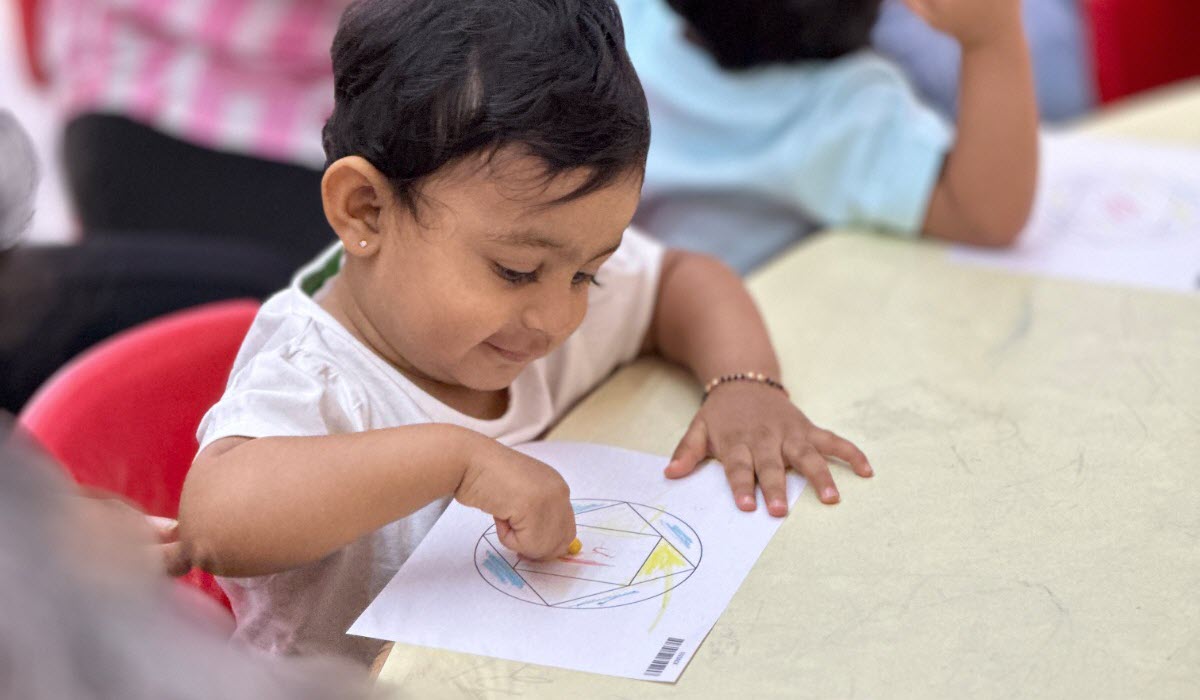
Through learning through play, babies practice problem solving, coordination, communication, and emotional regulation. Simple activities like stacking cups, singing songs, or exploring textures are deeply valuable for baby brain development.
This is the philosophy behind Tickle Right, which focuses on whole brain development through age appropriate, play based experiences that respect each child’s natural rhythm.
While baby development milestones by month offer guidance, missing one milestone exactly on time does not automatically indicate a concern. Babies often focus on one area of development at a time.
It may be worth observing further if a baby shows very little movement, limited response to sound or interaction, or a noticeable loss of previously acquired skills. Even then, observation and professional guidance are more helpful than panic.
Most variations fall well within normal developmental ranges. Supporting learning through play, offering connection, and providing a nurturing environment are often enough to encourage progress.
The first year is not about achieving a checklist. It is about building trust, curiosity, and connection. Understanding baby development milestones helps parents notice growth while staying grounded.
Tickle Right’s infant stimulation programme is designed for children between 6-15 months, to support baby brain development in a holistic way, focusing on play, sensory engagement, skill-building and emotional bonding. By encouraging learning through play, parents can support development naturally and joyfully.
Trust your baby. Trust the process. Growth is happening every day, even when it looks quiet.