Feb 17, 2026
Many parents notice a phase when their child echoes words, questions, or even entire sentences they just heard. It can feel surprising, amusing, or sometimes worrying. You may wonder if


As parents, it is natural to notice what other babies are doing and quietly wonder if your own child is keeping up. Many parents find themselves asking, is my baby developing normally, especially when their baby has not started crawling, clapping, or babbling yet. Social media, well meaning advice, and milestone charts can make these concerns feel heavier than they need to be.
If you are worried about a baby not meeting milestones, you are not alone. The good news is that development in the first year is far more flexible than it often appears.
Milestones are meant to be reference points, not performance tests. However, when parents hear phrases like six month milestones or nine month skills, it can feel as though something is wrong if a baby does not follow that exact order.
The reality is that baby development varies widely. Some babies focus on movement first, while others spend more time observing, listening, and processing. When parents ask, “Is my baby developing normally?”, the answer is usually yes, even if the timeline looks different from another child’s.
A baby not meeting milestones at a specific age does not automatically mean delayed development. It often means the baby is developing in a different sequence.
It is important to understand that development is not linear. A baby may skip crawling and move straight to standing. Another baby may babble later but show strong social connection early on. This is why experts repeatedly emphasise that baby development varies.
The brain develops through experience, repetition, and connection. Skills build on one another, but the order can change. When parents worry about a baby not meeting milestones, they often overlook the many skills their baby is already building quietly.
This is also why asking, “Is my baby developing normally?” should always include looking at the whole picture rather than one missing skill.
Crawling is helpful, but not every baby crawls. Clapping is a learned imitation skill, not a reflex. Babbling develops at different paces depending on how much a baby listens before attempting sound.
A baby not meeting milestones like these may still be developing strong coordination, attention, or sensory awareness. These foundations matter just as much.
This is another clear example of how baby development varies. Some babies practice skills internally before showing them outwardly. Others experiment visibly and often.
Most of the time, parents asking, “Is my baby developing normally?” are seeing normal variation, not a problem. It is common for babies to delay one skill while accelerating another.
For example, a baby who is deeply focused on physical movement may speak later. A baby who is highly observant may take longer to clap or imitate gestures.
A baby not meeting milestones in one area may be progressing beautifully in emotional bonding, problem solving, or sensory processing. This is why development should always be viewed holistically.
While reassurance is important, clarity matters too. Observation does not mean panic. It simply means staying attentive.
Parents may want to observe further if a baby not meeting milestones also shows very limited interaction, little response to sound, or reduced movement over time. If you find yourself repeatedly asking, “Is my baby developing normally?” and notice a lack of progress across multiple areas, professional guidance can help bring peace of mind.
Still, it is worth repeating that baby development varies, and most concerns resolve naturally with time, interaction, and play.
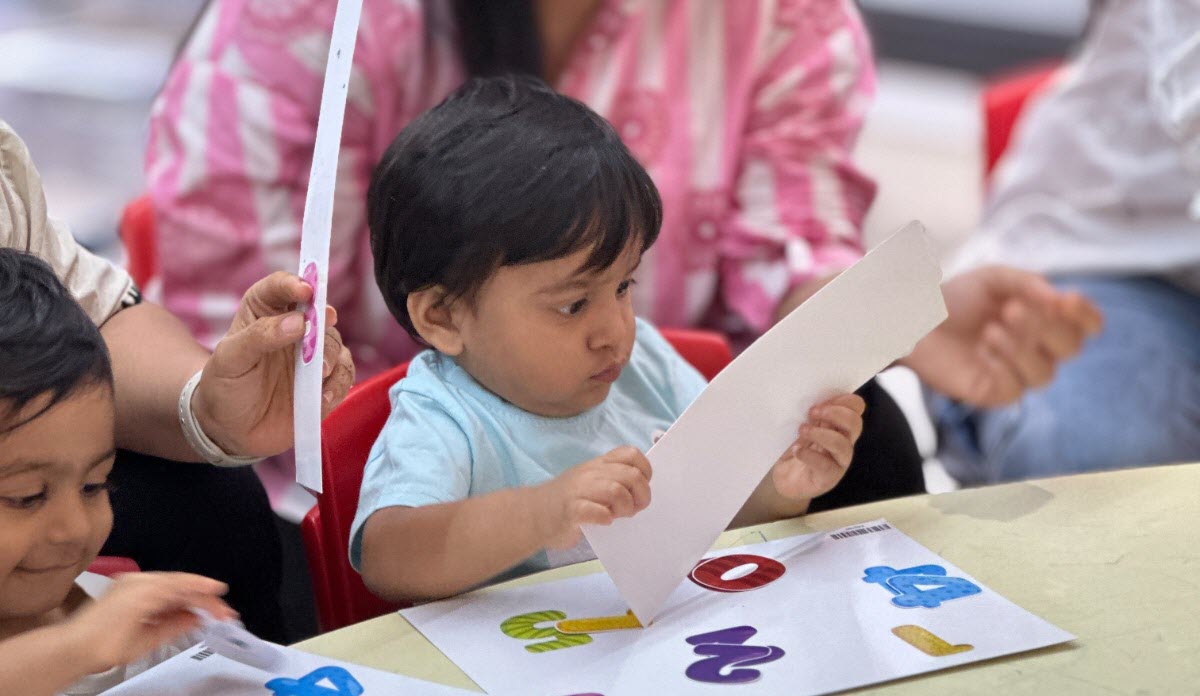
One of the most effective ways to support development is through learning through play. Play allows babies to explore movement, sound, texture, and social connection in a pressure free way.
Through learning through play, babies build neural pathways that support communication, coordination, and emotional regulation. Even when a baby not meeting milestones appears behind in one area, play often helps skills emerge organically.
This is because learning through play works with the brain’s natural rhythm rather than forcing outcomes.
A holistic approach recognises that emotional security, sensory experiences, and connection are just as important as physical skills.
At Tickle Right, the focus is on supporting natural development through play based, age appropriate experiences. Rather than asking parents to push milestones, Tickle Right encourages environments where babies feel safe to explore at their own pace.
This philosophy respects the truth that baby development varies and that confidence and curiosity often lead skills to emerge naturally.
If you are concerned about a baby not meeting milestones, pause and observe what your baby is doing rather than what they are not doing. Notice their expressions, engagement, and curiosity.
When parents repeatedly ask, “Is my baby developing normally?”, the most helpful answer often lies in connection rather than comparison. Talk, sing, move, and play together. These moments matter more than charts.
Support systems like Tickle Right exist to guide parents without pressure, offering tools that align with how babies naturally learn and grow.
Development is not a race. It is a relationship between biology, environment, and experience. A baby not meeting milestones today may surprise you tomorrow.
Remember that baby development varies, and most differences fall well within healthy ranges. By embracing learning through play and staying responsive, parents create the conditions children need to thrive.
And when in doubt, gentle observation and informed support, including resources like Tickle Right, can make the journey calmer and more confident for both parent and child.