Feb 17, 2026
Many parents notice a phase when their child echoes words, questions, or even entire sentences they just heard. It can feel surprising, amusing, or sometimes worrying. You may wonder if


If you have ever noticed how a newborn instantly calms down when held close, you have already witnessed the power of touch. Many parents are surprised to learn that why touch is the first sense to develop in babies is deeply rooted in biology. Long before a baby can see clearly or hear distinctly, their sense of touch is active and shaping their world.
Understanding why touch is the first sense to develop in babies helps parents appreciate how essential early physical connection is. From the womb itself, babies respond to tactile sensations. By the eighth week of pregnancy, receptors around the mouth begin forming. By the second trimester, much of the body is sensitive to touch. This early development highlights how touch development in babies begins far earlier than most of us imagine.
When we explore why touch is the first sense to develop in babies, the answer lies in survival and brain wiring. Touch provides immediate information about safety, temperature, pressure, and comfort. A baby cannot rely on vision at birth, but they can rely on skin-to-skin contact.
Research shows that touch development in babies plays a direct role in neural connections. Every cuddle, gentle stroke, or reassuring pat activates sensory receptors that send signals to the brain. These signals strengthen neural pathways responsible for emotional regulation and cognitive growth. That is why the sense of touch in newborns is not just about comfort. It is foundational to development.
Repeated tactile experiences build brain architecture. When parents hold, massage, or gently rock their child, they are stimulating brain areas linked to learning, attachment, and memory. This is one of the key reasons why touch is the first sense to develop in babies and why it continues to influence development long after birth.
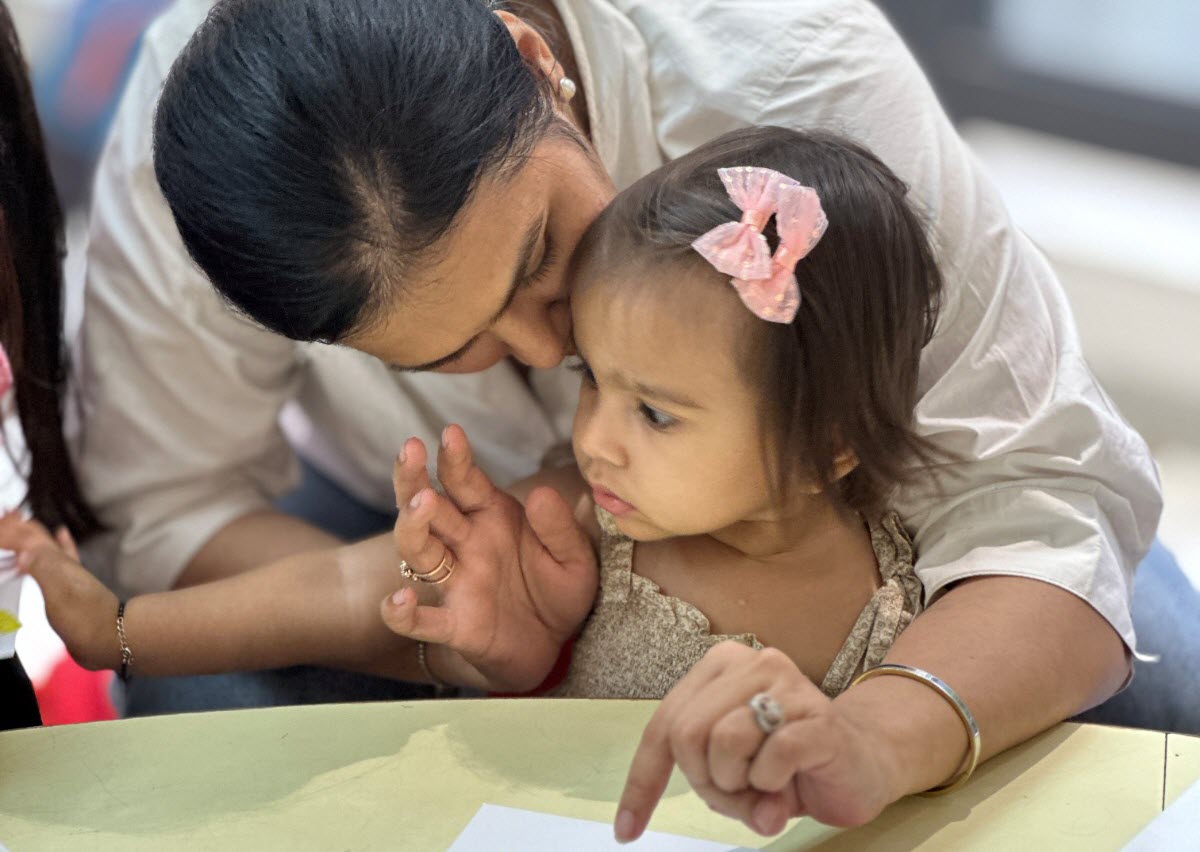
Beyond physical growth, the importance of touch in early childhood cannot be overstated. Babies who receive consistent affectionate touch tend to show stronger emotional security. The body releases oxytocin during positive touch experiences, which promotes bonding and reduces stress hormones.
When we consider why touch is the first sense to develop in babies, it becomes clear that nature designed it to build connection first. Emotional security begins with feeling safe in someone’s arms. This sense of safety lays the groundwork for curiosity and exploration later.
Studies also suggest that the sense of touch in newborns directly affects attachment patterns. When babies are frequently cuddled, carried, and comforted, they develop trust. That trust allows them to explore their surroundings confidently. This is where the importance of touch in early childhood connects directly to learning.
It is fascinating to see how touch development in babies influences the brain’s structure. Sensory experiences create synaptic connections. The more varied and positive those experiences are, the stronger the brain networks become.
Understanding why touch is the first sense to develop in babies helps parents see how early tactile input supports later skills such as focus, coordination, and language. Even fine motor control begins with tactile feedback.
When babies grasp fingers, explore textured toys, or feel different surfaces, they are building neural maps. These maps support higher-level thinking later. That is why the importance of touch in early childhood extends into academic readiness and problem-solving abilities.
The good news is that supporting touch development in babies does not require expensive equipment. Everyday interactions provide powerful stimulation.
Each of these practices strengthens neural connections and deepens emotional bonds.
At Tickle Right, we deeply understand why touch is the first sense to develop in babies and how it shapes the foundation for future learning. Sensory experiences are not isolated events. They are part of a holistic developmental journey.
Our approach focuses on multi-sensorial engagement because touch development in babies connects directly to cognitive, emotional, and motor growth. Through guided activities that stimulate the sense of touch in infants, we create safe opportunities for exploration.
Our Tickle Right sensory development philosophy emphasizes playful interaction. We integrate tactile exploration with music, movement, and bonding exercises. This reinforces the importance of touch in early childhood while building confidence and curiosity.
Parents often ask again and again about why touch is the first sense to develop in babies. The answer lies in the profound way touch shapes both brain and heart. Without strong early tactile input, children may miss out on foundational emotional and neural reinforcement.
When families intentionally nurture touch development in babies, they are investing in long-term growth. The consistent reinforcement of the sense of touch in newborns strengthens secure attachment. The ongoing recognition of the importance of touch in early childhood builds resilience and readiness.
Tickle Right offers a dedicated multi-sensorial infant program for children between 6 to 15 months. Our sessions are designed around the science of why touch is the first sense to develop in babies, ensuring that every activity strengthens touch development in babies along with essential life skills in a safe and joyful way.
Through guided tactile play, bonding exercises, and structured sensory engagement aligned with the Tickle Right brain development philosophy, we help parents nurture the sense of touch in infants while reinforcing the importance of touch in early childhood.
Because when learning begins with touch, it begins with connection. And connection is where lifelong growth starts.