Aug 29, 2026
In a world that is growing rapidly, remembering facts isn’t enough anymore. Being “smart” today looks more like being able to focus and think differently. That’s exactly why Malleshwaram parents

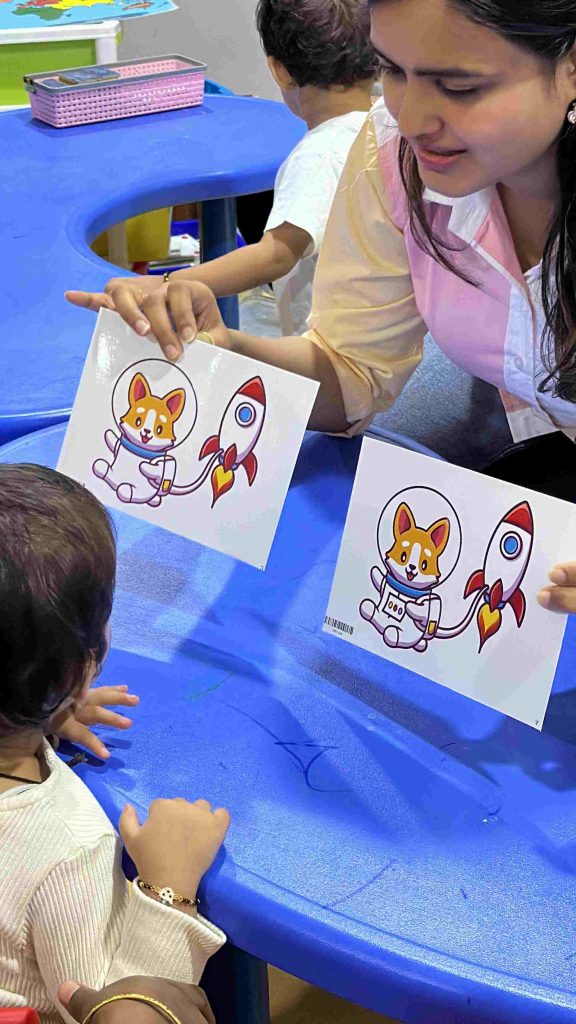
Flashcards are one of the simplest toys in the room: a small stack of cards with a picture, word or number on them. But in the hands of a curious toddler and a patient parent, a simple flash card activity can turn into a matching game, a guessing game, a storytelling session or a quick round of “what’s missing?”
Flashcards for kids have been part of early learning for years because they are simple, portable and flexible. Parents look for flashcard ideas for kids because these small cards give children short, playful opportunities to practise recognising pictures, naming objects and building vocabulary. Turning flashcards into games instead of flipping through them like a quiz can make the activity more engaging and hold a child’s attention longer.
In this article, you’ll find what flashcards mean, the benefits and advantages of flash cards, age-based flashcard games for 2 year olds through kindergarten, 15 genuinely different flashcard game ideas, how to use flashcards effectively with kids, common mistakes to avoid, and answers to the questions parents ask most often.
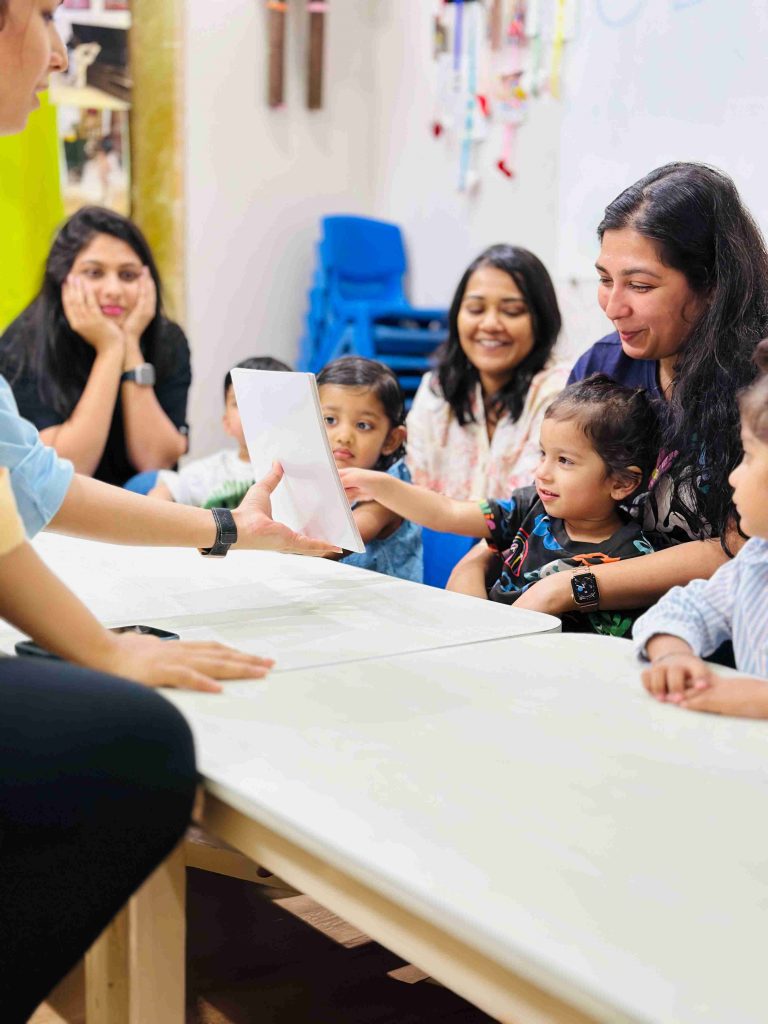
So, what are flash cards for kids, exactly? In simple terms, flashcards are learning cards that show a picture, word, number or simple concept, usually one item per card. Children look at the card, and with a parent’s or teacher’s help, they practise naming, recognising or talking about what’s on it.
They’re used across many stages of early learning from a baby looking at a bold picture of an apple, to a preschooler sounding out the letter “A” on a card, to a kindergartener matching a word to its picture.
The flashcards meaning is best understood through the simple, repeated pattern they’re built around:
This “see it, name it, repeat it” pattern is what makes a flash card activity useful for practising recognition and recall not as a one-time test, but as a small, repeatable habit.
A flash card activity is simply any short, structured task built around a set of flashcards showing a card and naming it, sorting cards into groups, matching pairs, or turning cards into a small game. It doesn’t need to be complicated. The goal is to give a child a few focused minutes of practice with recognition, vocabulary or memory.
Flashcards help toddlers build memory, vocabulary and focus through short, repeated practice. Each card connects a picture with a word, supporting recognition and recall. Used playfully through matching, sorting or naming games. Flashcards also support visual learning and early cognitive skills like categorization and sequencing.
Flashcards can be built around almost any topic a child is curious about, including:
In simple terms: flash cards for kids are learning cards that use pictures, words or numbers to give children short, repeatable opportunities to practise recognising, naming and remembering things.
Flashcards work because they align with how the young brain naturally absorbs information. Two concepts explain most of what’s happening:
This is also why flashcards are a core tool in right brain education, an approach focused on strengthening a child’s photographic memory, visual processing and intuitive thinking during the early years when the brain is most receptive to this kind of stimulation. Programs like Tickle Right build on this same principle, using flashcards alongside music, movement and memory games to engage both hemispheres of a child’s brain.
Parents often search for the benefits of flashcards before deciding how to use them and use them the right way. Flashcards can offer more than one advantage at a time. Here’s what the advantages of flash cards look like in practice.
Every time a child sees a card, names it, and sees it again later, they’re practising a small memory exercise. Repetition, recognition and picture-word association are the building blocks of this process.
This doesn’t mean every child will remember every card after one or two sessions, memory develops differently for each child, and flashcards simply offer more chances to practise.
Flashcards give children a reason to say new words out loud. A parent can:
Over time, this can help children practise naming objects, answering simple questions and forming short sentences.
A flash card activity usually lasts just a few minutes and focuses on one card at a time. That structure: one task, one card, a clear start and end can make it easier for a young child to stay engaged, compared to a longer, open-ended activity.
Flashcards help children connect an image → word → meaning. For example, seeing a picture of a red ball, hearing the word “ball,” and understanding what a ball is used for all in one small exchange. This is one of the key benefits of flash cards for babies and younger toddlers, who are still building their vocabulary through sight and sound before they rely heavily on full sentences.
Beyond naming pictures, flashcards can be used to practise:
Flashcards work best as a two-way activity, not a one-way quiz. When parents turn them into a small game with movement, sounds or a bit of pretend play, children tend to stay interested longer than they would with straightforward, repetitive drilling.
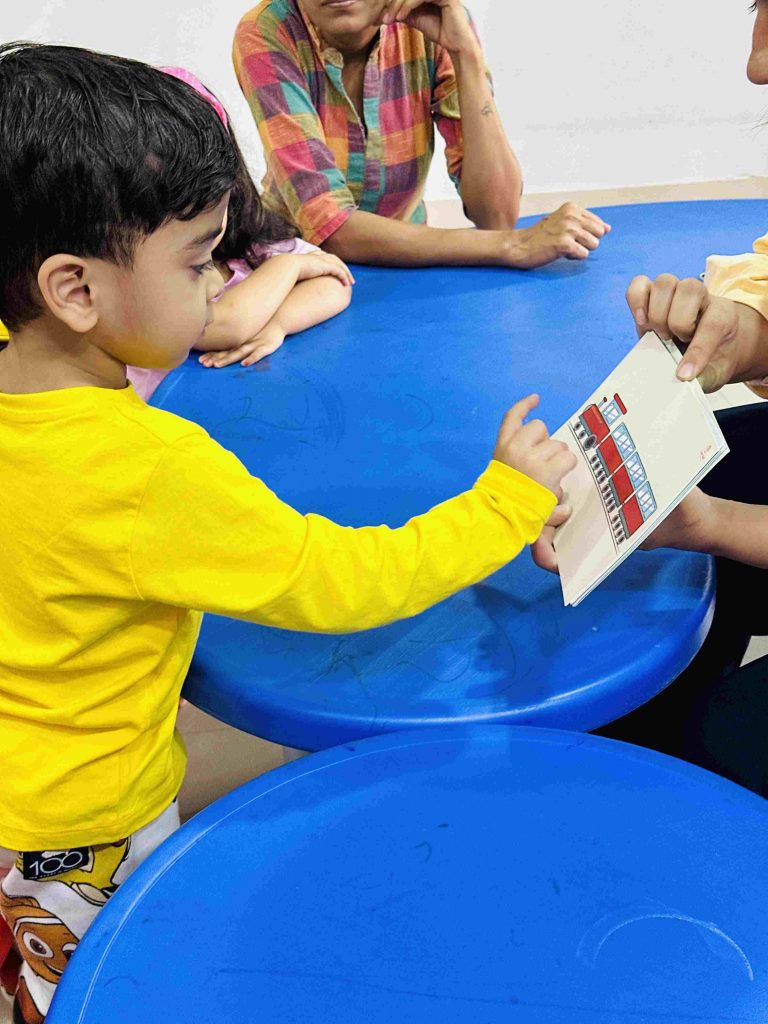
The benefits above explain what flashcards can support. This section explains how to actually use a flash card activity to practise these specific skills.
A simple four-step sequence can guide most flashcard memory activities:
This cycle is gentle by design. It’s meant to give children low-pressure chances to practise remembering, not to test them.
To help a flashcard activity support focus rather than lose a child’s interest:
Flashcards give children a reason to practise real language skills, including:
Because flashcards are picture-based, they give children repeated practice connecting a visual (the image) with a word and its meaning. This is often a child’s first step toward reading and stronger vocabulary, well before they can sound out full words on a page. Programs built around right brain flashcards and image-based learning often lean on this same visual-first idea.
Tickle Right’s programs use interactive, age-appropriate activities designed to give young children engaging ways to build early learning skills. If you’d like to see how this works in practice, you’re welcome to Book a Free Orientation.
There’s no single “correct” age to start using flashcards. Every child develops at their own pace, and the right flashcard games whether for babies, toddlers or kindergarteners depend on your child’s age, interests and current abilities.
For babies, keep things simple:
Toddlers, including flashcard games for 2 year olds, are usually ready for a bit more interaction:
Preschoolers including flashcard games for 5 year olds and flashcard games for kindergarten can usually handle more structure and complexity:
Every child is different, so use these as general starting points rather than fixed rules and adjust based on what your child seems ready for and interested in.
Here’s the heart of this guide: 15 genuinely different flashcard ideas for kids, so you’re never stuck doing the same “show and tell” flash card activity every time.
What you need: 5–8 flashcards.
How to play: Lay out several cards on the floor or table. Ask your child to look closely and close their eyes (or turn around) while you remove one card. Have them open their eyes and guess which card is missing.
Skills supported: Memory, recall, focus.
Best for: Toddlers and preschoolers.
What you need: Two identical sets of flashcards.
How to play: Spread all the cards face up. Ask your child to find two cards that match. For an added challenge, turn the cards face down and turn it into a memory-matching game.
Skills supported: Recognition, memory, visual matching.
Best for: Toddlers and preschoolers.
What you need: A set of paired flashcards, placed face down in a grid.
How to play: Take turns flipping two cards at a time, trying to find matching pairs. If the cards don’t match, flip them back down and let the next player try.
Skills supported: Memory, recall, turn-taking.
Best for: Preschoolers.
What you need: Any set of flashcards.
How to play: Hold up a card and ask your child to name what they see. Encourage a full sentence when they’re ready (“It’s a red apple”) instead of just a single word.
Skills supported: Vocabulary, language, recognition.
Best for: Babies through preschoolers.
What you need: Flashcards with everyday objects.
How to play: Show only part of a card (cover most of it with your hand or a piece of paper) and ask your child to guess what it is before revealing the whole picture.
Skills supported: Focus, visual recognition, guessing skills.
Best for: Toddlers and preschoolers.
What you need: A mixed set of flashcards from different categories (animals, fruits, vehicles).
How to play: Ask your child to sort the cards into the correct groups. Start with two categories and add more as they get comfortable. S
kills supported: Categorisation, cognitive skills, sorting.
Best for: Preschoolers.
What you need: A small set of flashcards.
How to play: Describe a card without showing it (“It’s yellow, it’s a fruit, monkeys like to eat it”) and ask your child to guess which card you’re describing.
Skills supported: Listening, vocabulary, reasoning.
Best for: Preschoolers.
What you need: 4–6 flashcards with a mix of characters, objects or places.
How to play: Lay out the cards and ask your child to make up a short story using each card in order. You can start the story and let them continue it.
Skills supported: Language, storytelling, creativity.
Best for: Preschoolers.
What you need: A set of flashcards that can form a simple sequence (numbers, days, or a routine like “wake up, eat, brush teeth”).
How to play: Lay out cards in the correct order, then remove one and ask your child what comes next.
Skills supported: Sequencing, memory, logical thinking.
Best for: Preschoolers.
What you need: A set of flashcards, tape or space to hide them.
How to play: Hide flashcards around a room (or safely around the house). Ask your child to find them, and each time they find one, have them name it.
Skills supported: Recognition, focus, physical activity.
Best for: Toddlers and preschoolers.
What you need: Flashcards of animals, actions or emotions.
How to play: Show a card and ask your child to act it out like a rabbit, roar like a lion, or make a happy face for the “happy” card.
Skills supported: Vocabulary, movement, expression.
Best for: Toddlers and preschoolers.
What you need: A set of flashcards.
How to play: Flip through cards quickly, asking your child to name each one as fast as they can. Keep the pace light and playful rather than pressured.
Skills supported: Quick recall, focus, confidence.
Best for: Preschoolers.
What you need: A set of flashcards.
How to play: Show a card and make a statement about it that’s either true or false (“This is a dog,” while showing a cat). Ask your child to say “yes” or “no” and correct you if needed.
Skills supported: Listening, reasoning, vocabulary.
Best for: Toddlers and preschoolers.
What you need: Any flashcard.
How to play: Show a card and ask your child open-ended questions: “What colour is it?” “Where do you find one?” “What sound does it make?” Encourage them to describe as much as they can.
Skills supported: Language, descriptive vocabulary, sentence building.
Best for: Preschoolers.
What you need: Blank cards or paper, crayons or markers.
How to play: Let your child draw their own pictures on blank cards. Using their homemade cards for any of the games above children often enjoy playing with cards they made themselves.
Skills supported: Creativity, ownership of learning, vocabulary.
Best for: Toddlers and preschoolers.
Looking for even more games using flashcards? You can mix and match ideas from this list pairing a matching game with a storytelling activity, for example to keep flash card games for kids feeling fresh from one week to the next.
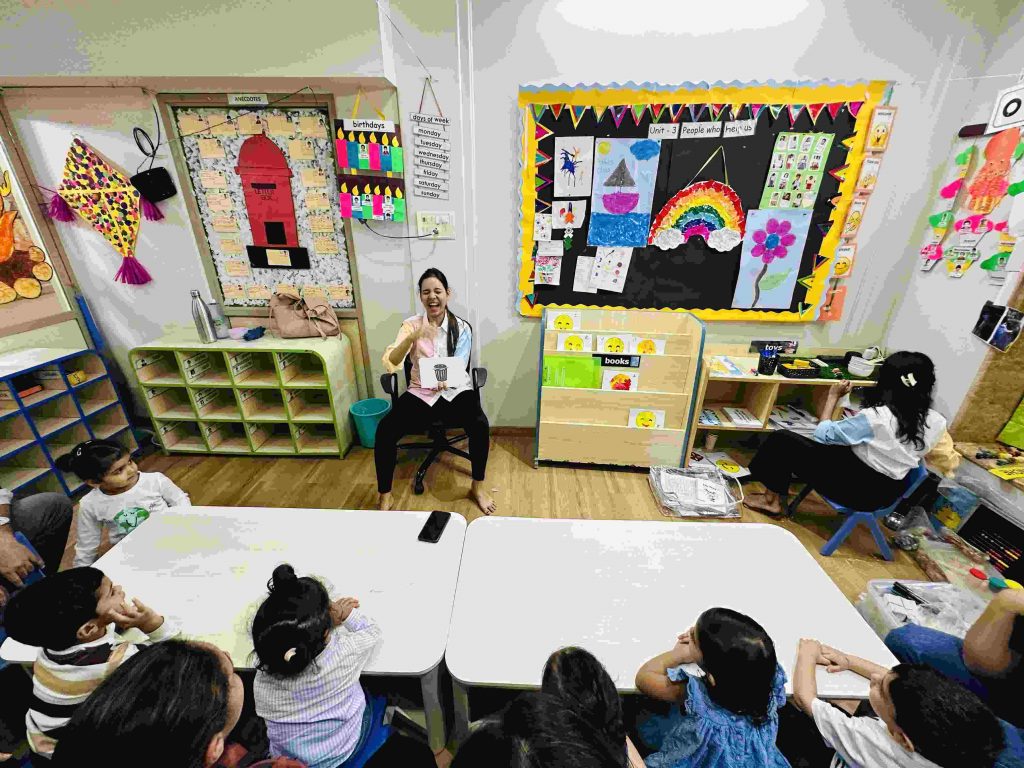
A few simple habits can make flashcard time work better for both you and your child.
A few minutes at a time is usually enough, especially for younger children. Short sessions are easier to fit into a routine and easier for children to stay engaged with.
Pick topics and difficulty levels that match where your child currently is not too easy to be boring, not too hard to be frustrating.
Let them hold the cards, choose the order, or lead the activity sometimes. Participation tends to hold attention better than passively watching.
Repeating cards helps with recall, but repeating them the exact same way every time can get dull. Change the game, not the goal.
If your child is fascinated by dinosaurs this week, use dinosaur flashcards. Interest-led learning tends to hold attention naturally.
If your child seems distracted, tired or frustrated, it’s fine to stop. There’s always another session later.
Flashcards work best as one part of a bigger learning routine, not a replacement for it. Pair them with:
Tickle Right uses interactive activities and learning techniques as part of its approach to early child development. Explore Tickle Right’s Program to see how this fits into a broader learning routine.
Even a simple flash card activity can lose its value if a few common habits creep in. Here’s what to watch for no judgment, just practical adjustments.
A big stack of cards can overwhelm a young child. Start small, five to eight cards is often plenty for one session.
Longer isn’t always better. Once attention starts to fade, the activity stops being useful and starts being a chore.
If every flashcard session feels like a quiz, children can start to associate flashcards with pressure instead of play. Keep the tone light and curious.
Cards that are far beyond your child’s current level can be frustrating rather than motivating. Match the difficulty to where they are right now.
Recognition and recall build gradually, over many small sessions not in a single sitting.
Every child learns at their own pace. Comparing your child’s progress to a sibling, classmate or another family can add pressure that isn’t helpful for anyone.
A few small tweaks can turn flashcard time from routine into something your child looks forward to.
Turn a card into an action jump, spin, or crawl like the animal on the card.
Animal noises, vehicle sounds or silly voices can make cards more memorable and more entertaining.
Combine a few cards into a short, silly story your child helps build.
Giving your child some control over which cards to use can boost their enthusiasm for the activity.
Homemade cards drawn by you or your child add a personal touch and can be based on things your child already loves.
Flashcards are one useful tool among many. Here’s how they compare to other common early learning activities:
| Activity | What It Can Help Children Practise |
|---|---|
| Flashcards | Recognition, recall, vocabulary |
| Storybooks | Language, comprehension, imagination |
| Puzzles | Problem-solving, spatial thinking |
| Matching games | Recognition and memory |
| Songs | Language, rhythm and recall |
| Pretend play | Creativity, communication and social skills |
None of these activities is “better” than the others; they simply support different skills. A well-rounded early learning routine usually includes a mix of all of them.
Both have a place, but they work differently:
Many parents use both apps for occasional solo practice, physical flashcards for shared, interactive learning time.
Answer: Flashcards for kids are learning cards that use pictures, words or numbers to help children practise recognising, naming and remembering things. They’re commonly used to build vocabulary, support memory practice and introduce early concepts like colours, shapes and letters.
Answer: A flash card activity is any short, structured task built around a set of flashcards such as naming a picture, matching pairs, sorting by category or turning cards into a guessing game. It’s meant to be a quick, focused burst of practice rather than a long lesson.
Answer: For babies, the advantages of flash cards mainly come from simple visual stimulation and early word association showing a clear picture of a familiar object while naming it out loud. Sessions should stay very short, and the activity works best when led by the baby’s own interest.
Answer: Flashcards can give children repeated, low-pressure chances to practise remembering pictures and words through recognition and recall. Results vary from child to child, since memory develops at different rates for every individual.
Answer: Yes, flashcards can give children a reason to say new words out loud, describe pictures, answer simple questions and build short sentences, all of which support early language development.
Answer: Flashcards can be a good fit for toddlers when kept short, simple and playful. Flashcard games for 2 year olds often work best with matching, naming and simple sounds or actions.
Answer: There’s no fixed age. Some parents introduce simple, high-contrast picture cards to babies, while others wait until toddlerhood, preschool or kindergarten. The right time depends on your child’s interest and readiness.
Answer: Short sessions work best, often just a few minutes, especially for younger children. It’s better to stop while your child is still interested than to continue until they lose focus.
Answer: Starting with five to eight cards is usually enough for one session. You can always add more cards gradually as your child becomes comfortable.
Answer: Turn them into a game instead of a quiz. Add movement, sounds, storytelling, or let your child choose the cards or make their own.
Answer: Yes. Blank cards or paper, along with crayons or markers, are enough to create simple homemade flashcards. Children often enjoy using cards they helped design themselves.
Flashcards for kids are a simple, flexible tool: a small stack of cards that can support memory, vocabulary, focus and early cognitive skills when used in short, playful sessions. Turning them into games, rather than a straightforward quiz, tends to keep children more engaged and makes each flash card activity something they look forward to.
Age-appropriate activities matter, since flashcard games for 2 year olds look very different from flashcard games for 5 year olds or flashcard games for kindergarten. And flashcards work best as one part of a broader learning routine alongside books, songs, puzzles and everyday conversation rather than a stand-alone method.
Make Learning More Engaging for Your Child
Tickle Right combines interactive, age-appropriate activities to support children’s early learning in a way that feels playful, engaging and pressure-free. If you’re ready to take the next step, find a Tickle Right batch for your child and get started.