Raising a 5-year-old is a whirlwind of curiosity, boundless energy, and constant learning. At this age, children are stepping into school life more independently, building friendships, and beginning to develop
Meaningful Ways to Celebrate Diwali with Your Child: 10 Fun Activities for Kids
Diwali is one of the happiest times of the year, and children notice everything about it: the glowing diyas, the colourful rangoli, the sweets and the way the whole family comes together. If you are looking for Diwali activities for kids that go beyond watching the preparations, this guide shares 10 simple ideas your child can take part in. Each one explains what you need, how to do it and what your child may practise along the way. You will also find age-wise suggestions, safety guidance and answers to common parent questions, so you can celebrate in a way that feels calm, safe and meaningful for your family.
Why Is It Important to Celebrate Diwali with Children?
Children learn a great deal from watching and joining in. When they help with small festive tasks, Diwali stops being something that happens around them and becomes something they are part of. It also gives parents a natural moment to share family traditions at a pace children can follow.
Help Children Understand the Meaning of Diwali
Diwali is often described as the festival of lights, and many families link it to ideas such as light over darkness, hope and goodness. It is celebrated by Hindus, Jains and Sikhs, among others, and each community and region has its own stories and customs. For a young child, keep it simple: tell one short story you grew up with, point to the diyas and say, “We light lamps to celebrate hope and happy things.” Short, repeated explanations work better than long ones.
Create Meaningful Family Memories
A hand-painted diya or a wobbly rangoli made together is remembered long after a shop-bought decoration is forgotten. Let your child do a real part of the job, even if the result is not perfect. Grandparents, cousins and older siblings can join in too, which makes the preparation as enjoyable as the day itself.
Introduce Values Like Sharing and Gratitude
Diwali has many built-in moments for kindness: sharing sweets, visiting relatives, thanking the people who help us, giving a card or a small gift. Talk about these as you do them. A simple line such as “We are making this card to tell Nani we love her” connects the activity to the value without turning it into a lecture.
10 Fun and Meaningful Diwali Activities for Kids
Choose activities that match your child’s age, interests and abilities, and stay with them throughout. The ideas below suit toddlers to early primary children (roughly 1 to 7 years). Each one lists a simple adaptation so you can scale it up or down. Children develop at different paces, so treat the ages as a starting point rather than a rule.
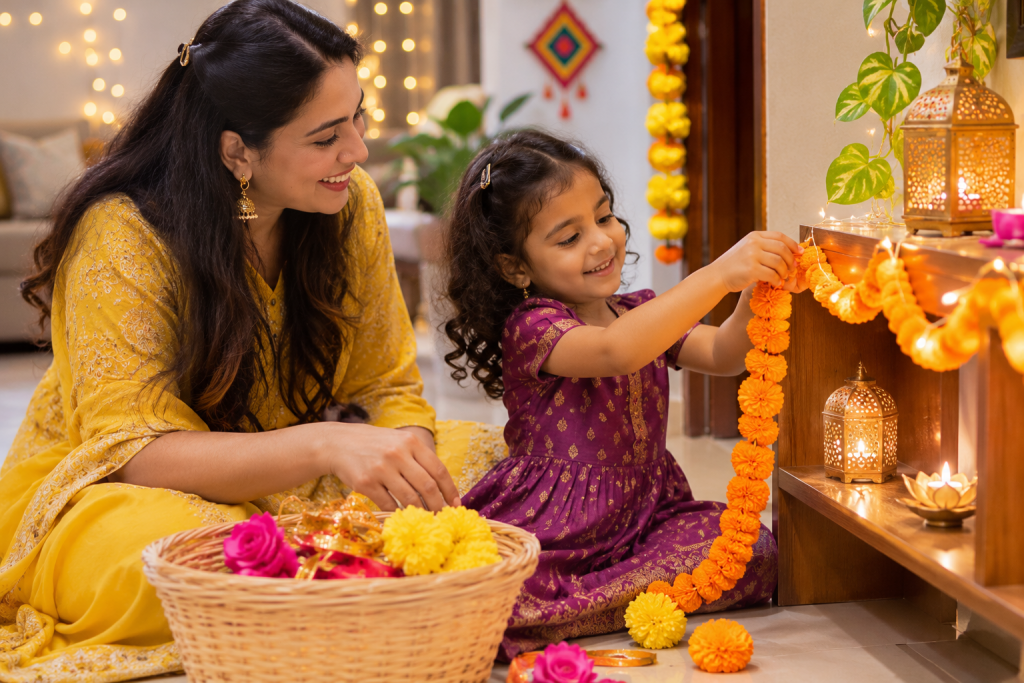
1. Decorate Your Home Together for Diwali
- Best for: 1 to 7 years
- You will need: Fresh or paper flowers, fabric or paper garlands, ribbons, a low table or a corner of the floor.
- How to do it: Set out a small basket of lightweight decorations and let your child choose where to place them. Ask simple questions: “Which colour should go next to the yellow flowers?” Let them arrange a flower garland on a low shelf or around a doorway at their height.
- What children practise: Colour recognition, creativity and decision-making.
- Adapt it: For toddlers, offer two or three choices only. For older children, give them one area of the house to plan and decorate themselves.
- Safety: Keep strings, ribbons and wires short and out of reach when the activity ends, and keep decorations away from lamps and candles.

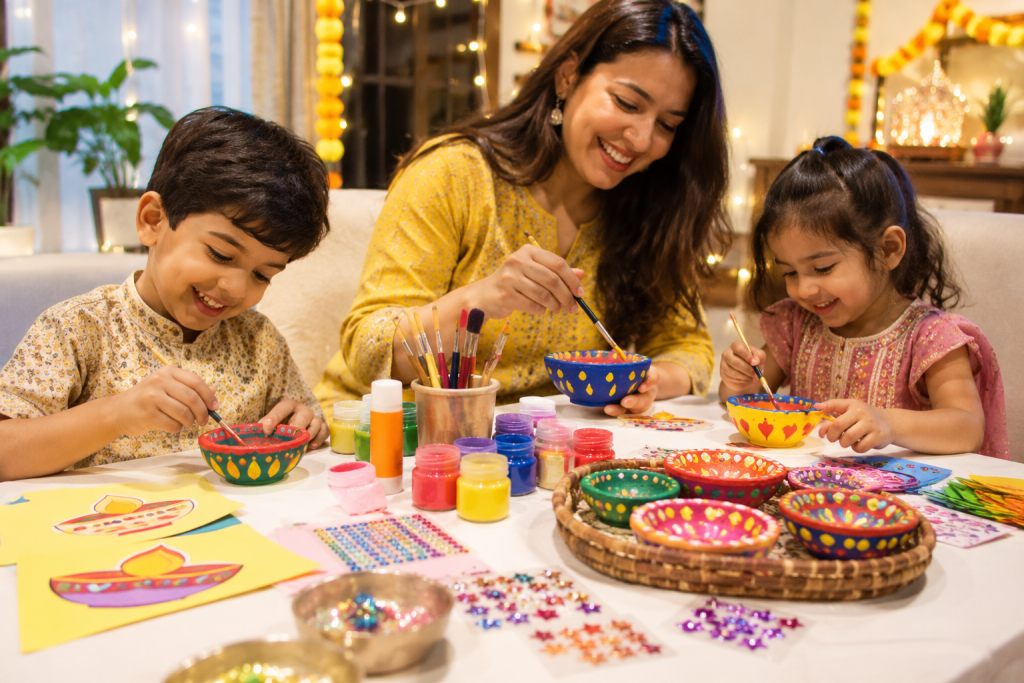
2. Make and Decorate DIY Diya Crafts
- Best for: 2 to 7 years
- You will need: Paper or card diya templates (or air-dry clay for older children), non-toxic paints or crayons, stickers, glue sticks.
- How to do it: Give each child a plain diya shape and let them decorate it with colours, patterns and stickers. Older children can shape a small clay diya and paint it once it dries. Display the finished diyas on a window sill or a decorated tray.
- What children practise: Creativity, hand-eye coordination and fine motor control as they hold crayons, brushes and stickers.
- Adapt it: Use large templates and chunky crayons for toddlers. Add glitter-free textures such as torn tissue paper for children who enjoy more detail.
- Safety: Treat these as display pieces. Only adults should light real diyas or candles, well away from children. If you want a glowing effect, use LED tea lights with a secured battery compartment, because button batteries are a choking and swallowing hazard.
This Diwali, Give Your Child a Gift That Keeps Growing!
Festivals are a wonderful time to create memories and learn new skills together. At Tickle Right, children learn through fun games, music, flashcards and hands-on activities designed to encourage creativity, memory, focus and curiosity.
Give your little one a brighter beginning this Diwali!
Claim Your Diwali Offer – Get Up to 30% OFF
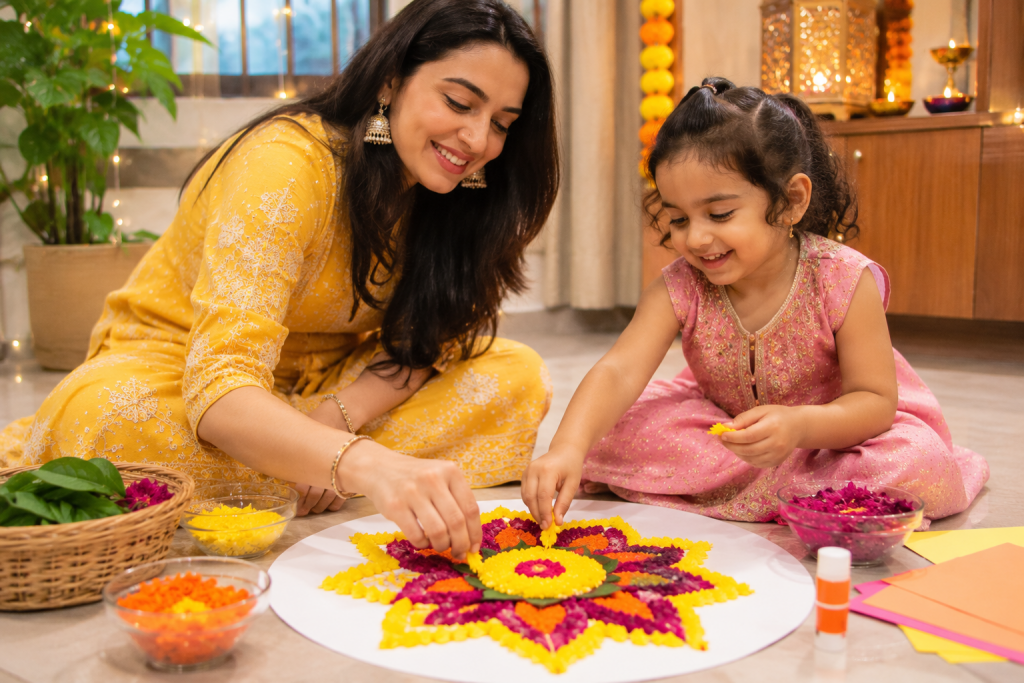
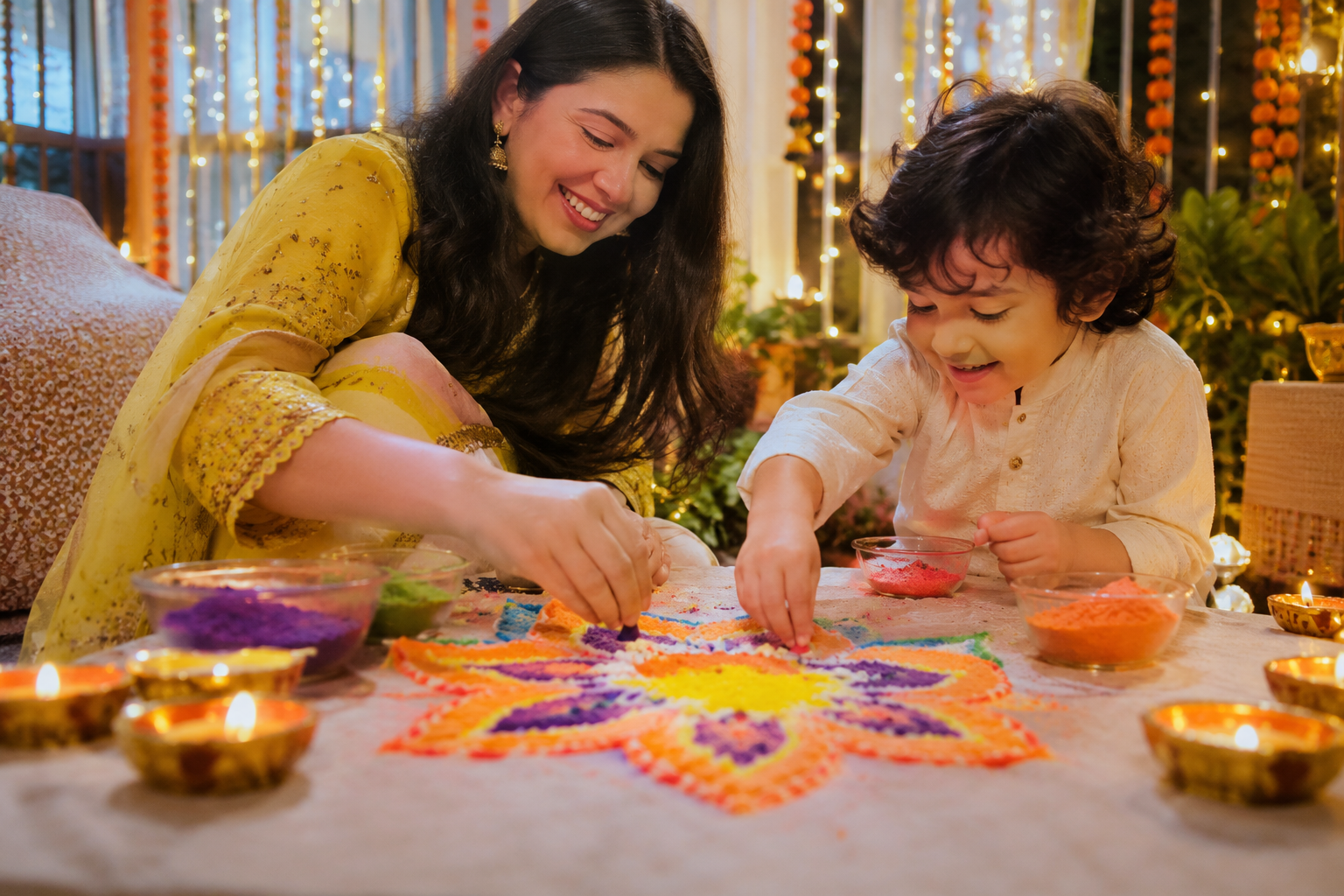
3. Create a Colourful Diwali Rangoli
- Best for: 2 to 7 years
- You will need: Flower petals, paper shapes, leaves, large sheets of paper or card, glue stick.
- How to do it: Draw a simple outline such as a circle or flower on paper and let your child fill it in with petals or paper shapes. Start with one repeating pattern (red, yellow, red, yellow) and let them extend it. Older children can plan a symmetrical design before they begin.
- What children practise: Pattern recognition, observation and creativity.
- Adapt it: Younger children can stick shapes freely without a pattern. Older children can try a design with a centre point and matching sections around it.
- Safety: For children under 3, stick to large petals and paper shapes rather than coloured powders, grains or tiny beads, which can be swallowed or inhaled.

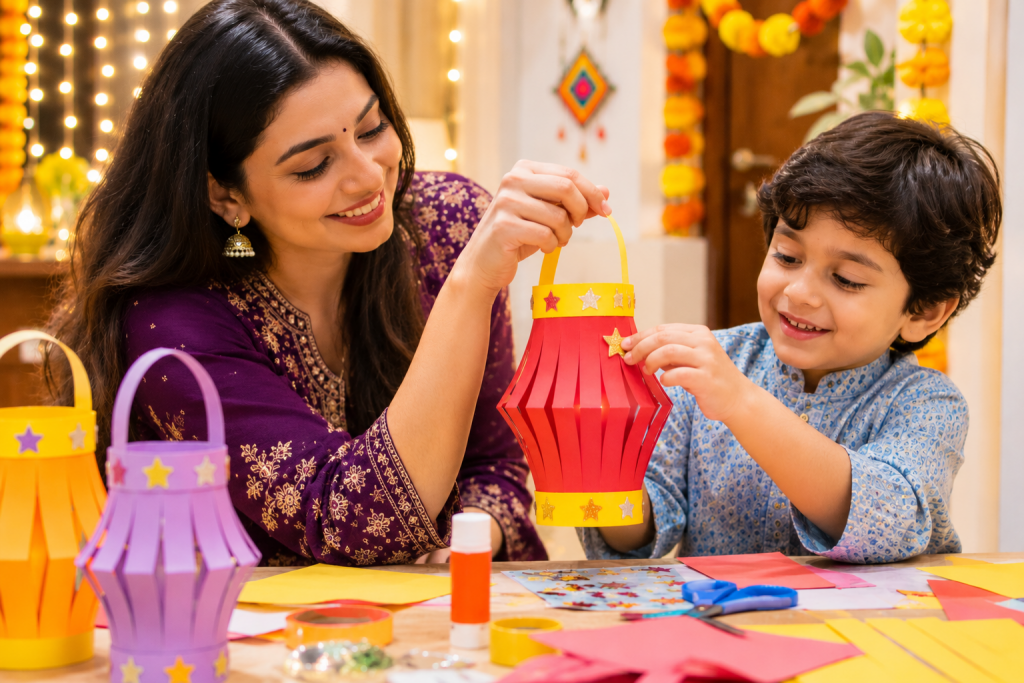
4. Make Paper Lanterns and Festive Decorations
- Best for: 3 to 7 years (with help for younger children)
- You will need: Coloured paper, child-safe scissors, glue sticks, stickers, string.
- How to do it: Fold a sheet of paper in half, draw lines from the fold almost to the edge, cut along them, open it out and roll it into a cylinder. Add a paper handle. For younger children, pre-cut the shapes so they only decorate and stick.
- What children practise: Creative expression, hand-eye coordination and following steps in order.
- Adapt it: Younger children can decorate a ready-made lantern. Older children can add patterns, names or festive words.
- Safety: Use paper lanterns for decoration only and keep them away from any flame. Keep the string short and supervise all cutting.

5. Prepare Easy Diwali Sweets Together
- Best for: 3 to 7 years (with an adult doing all heating)
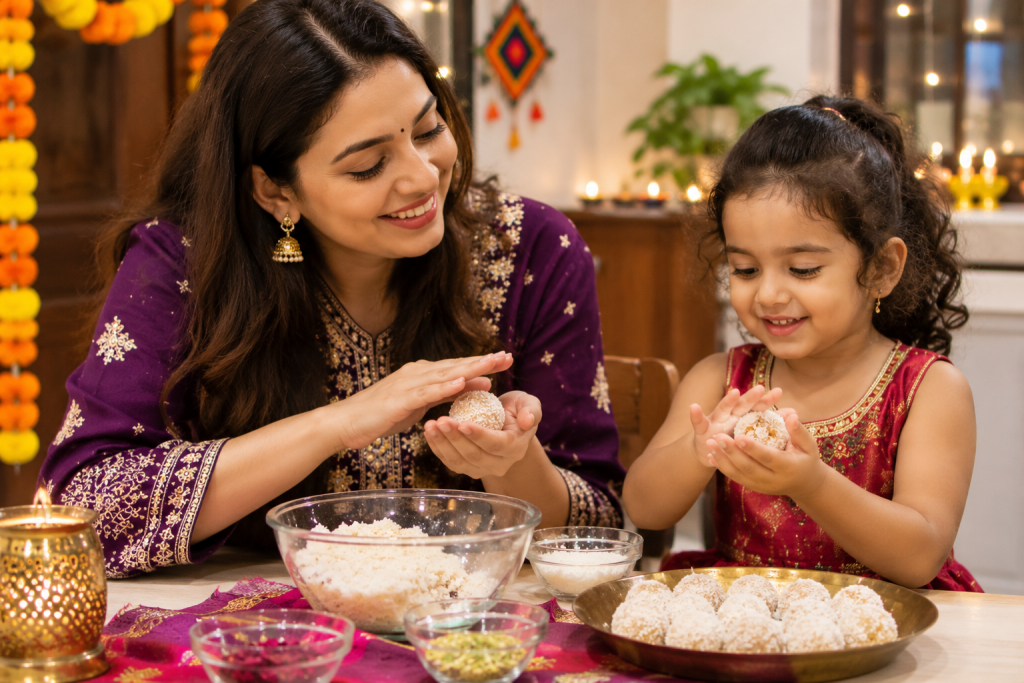
- You will need: A soft sweet mixture that an adult has already cooked and cooled, such as coconut ladoo, plus clean hands, a tray and small bowls.
- How to do it: Let your child scoop a small spoonful, roll it between their palms and place it on a tray. Talk about what they see, feel and smell: soft, sticky, round, sweet. Let them arrange the finished sweets on a plate.
- What children practise: Following instructions, observation and sensory exploration.
- Adapt it: Toddlers can press a soft mixture into a mould or help with stirring something cool. Older children can measure ingredients under supervision.
- Safety: Adults should handle hot utensils, stoves and hot sugar syrups. Check for allergies before cooking. Do not give honey to babies under 12 months, and avoid whole nuts, hard pieces and sticky sweets for children under 4, as they are choking hazards.
Spark a New Skill in Your Child This Diwali!
The best Diwali gifts are the ones that help children grow. This festive season, give your child opportunities to build creativity, memory, focus and curiosity through playful learning.
At Tickle Right, every little activity is an opportunity to learn something new!
Give Your Child a Special Diwali Gift – Claim Up to 30% OFF
6. Tell Children the Stories Behind Diwali
- Best for: 1 to 7 years
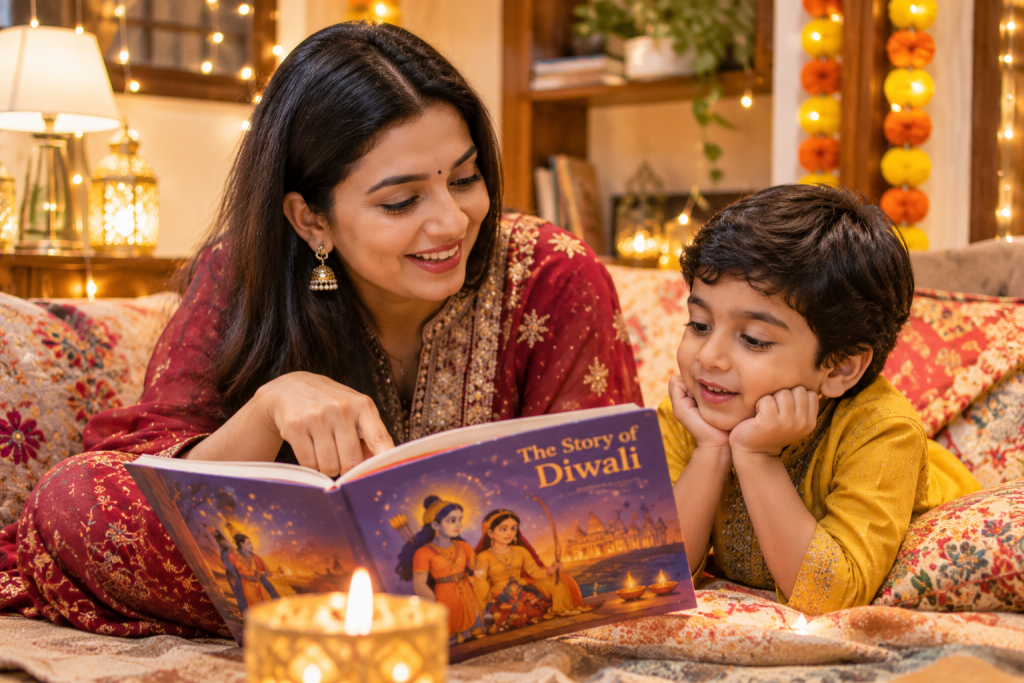
- You will need: A picture book or illustrated cards, cushions, a calm corner.
- How to do it: Choose a short story your family tells, such as Rama’s return to Ayodhya or a story about Lakshmi, and tell it with pictures. Stop to ask, “What do you think happens next?” or “What is the diya doing in this picture?” Let your child retell the story in their own words.
- What children practise: Listening, vocabulary development and imagination.
- Adapt it: For toddlers, use one picture and a few words per page. For older children, let them act out the story with soft toys or draw their favourite scene.
- Safety: Choose gentle, age-appropriate versions of stories and skip anything that may frighten your child.

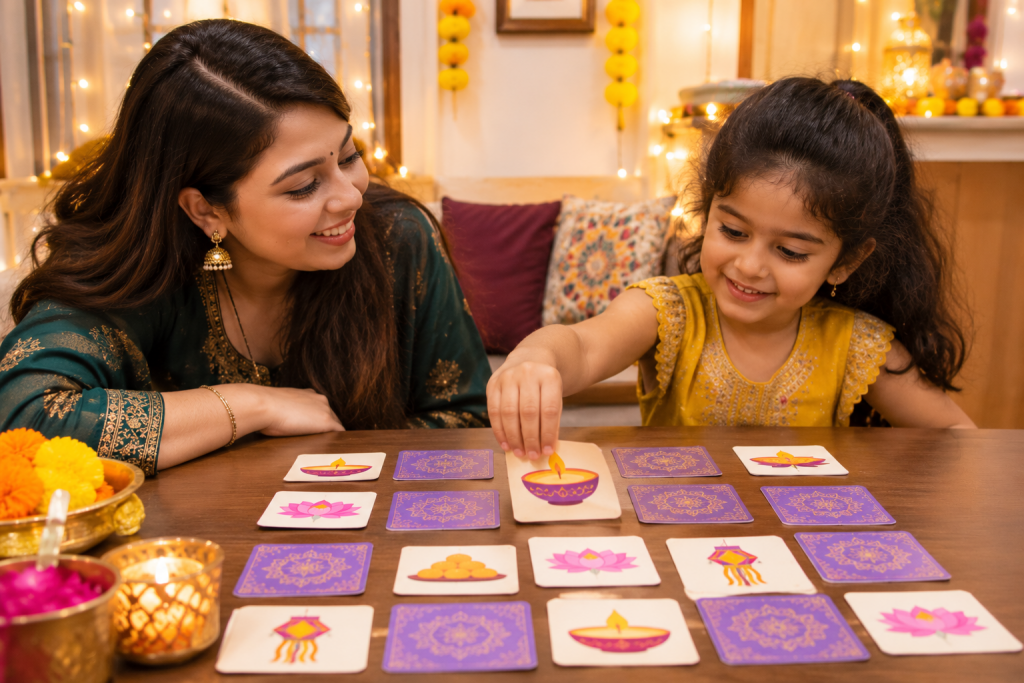
7. Play Diwali Memory and Matching Games
- Best for: 2 to 7 years
- You will need: Paper or card cut into equal squares, markers or printed pictures of diyas, sweets, flowers and lanterns.
- How to do it: Make two cards of each picture. Start with three pairs placed face-up and ask your child to match them. When that feels easy, turn the cards face-down and play a memory game, adding pairs one at a time.
- What children practise: Memory, attention and visual observation.
- Adapt it: Toddlers can match pictures with the cards face-up. Older children can play against a parent or sibling and take turns recording the score. For more card-game ideas, see our guide to fun flashcard game activities for toddlers and kids.
- Safety: Use large cards that cannot be swallowed, and take them away when the game is over.

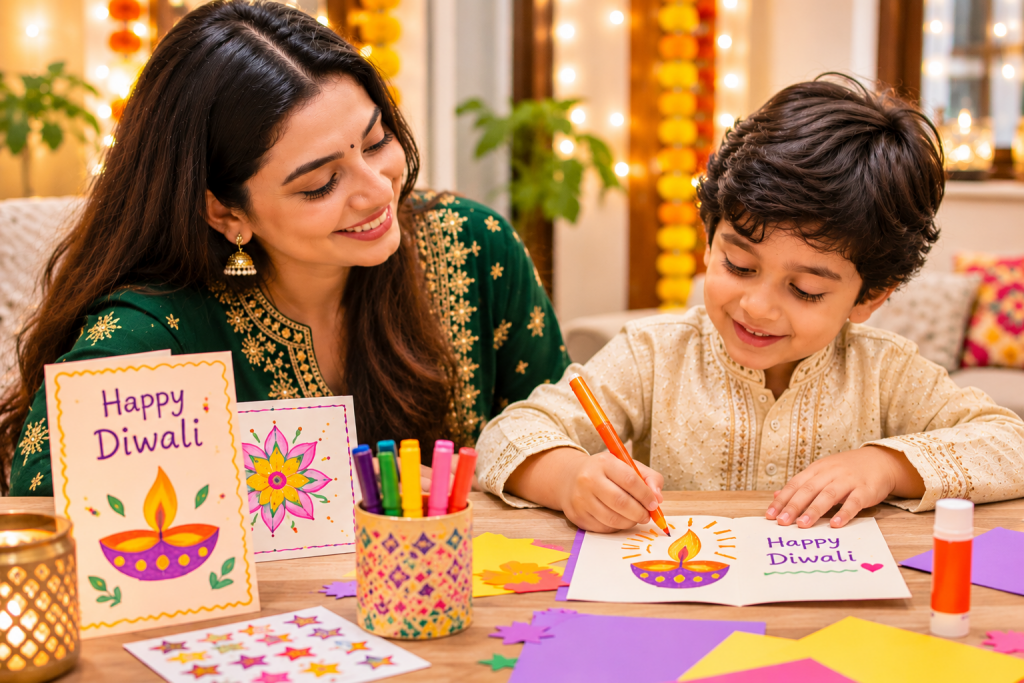
8. Make Handmade Diwali Greeting Cards
- Best for: 3 to 7 years
- You will need: Card or thick paper, child-safe crayons or markers, stickers, glue stick.
- How to do it: Fold the card in half and let your child draw a diya, rangoli or a picture of the person who will receive it. Older children can write a name or a short message, while younger children can “sign” with a scribble or a handprint made with washable paint.
- What children practise: Creativity, communication and self-expression.
- Adapt it: Pre-write the greeting for younger children and let them decorate. Older children can write their own message.
- Safety: Choose non-toxic, washable colours and skip glitter or tiny embellishments for young children.

9. Enjoy a Diwali Music and Dance Session
- Best for: 6 months to 7 years
- You will need: A speaker or phone, a clear floor space, optional scarves or a shaker made from a sealed container (adult-made).
- How to do it: Play a few family-friendly festive songs at a comfortable volume. Clap along, march slowly, then fast, then freeze when the music stops. Babies can be held and gently swayed. Invite grandparents and cousins to join.
- What children practise: Listening, rhythm, movement and coordination.
- Adapt it: Slow the pace for toddlers and add simple actions like “jump like a diya flame.” Older children can lead a dance or invent steps.
- Safety: Clear the floor of small objects and trip hazards, and keep the volume low enough for sensitive ears.
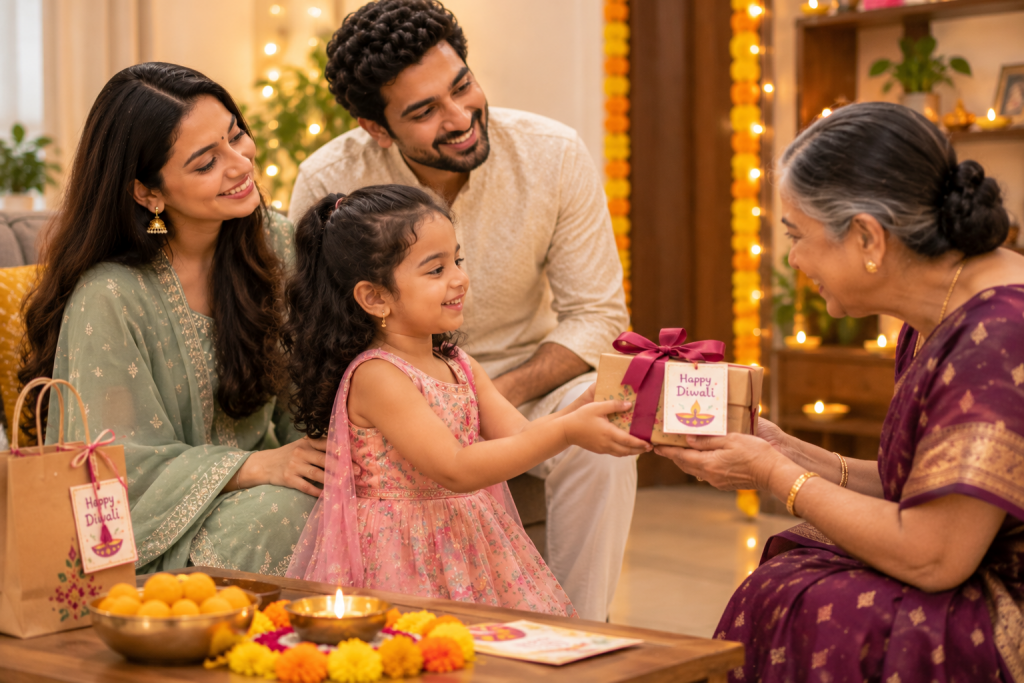
10. Share Sweets and Gifts with Others
- Best for: 3 to 7 years
- You will need: Small boxes or paper bags, wrapped sweets or fruit, handmade cards, ribbon.
- How to do it: Let your child help put a card and a treat into each pack and decide who will receive it: a grandparent, neighbour, helper at home or teacher. When you hand it over, let your child say “Happy Diwali” and give it to themselves.
- What children practise: Empathy, generosity and social interaction.
- Adapt it: Toddlers can place items into a bag and hand it over with your help. Older children can write the names and decide what goes in each pack.
- Safety: Check allergies and age suitability of any sweets you share with other families, and avoid whole nuts and hard sweets for young children.

Diwali Activities for Kids Based on Their Age
Every child develops at their own pace. Use the age groups below as a guide and adjust to what your child enjoys and can do safely, with an adult close by at all times.
Diwali Activities for Babies (6 – 12 Months)
Babies enjoy watching and listening. Hold your baby near colourful decorations and talk about what they see. Play gentle festive music, sway together and let them feel safe textures such as a soft cloth or a large, smooth fabric flower under supervision. Keep small decorations, flower petals and sweets out of reach, since babies put things in their mouths.
Diwali Activities for Toddlers (1 – 3 Years)
- Simple paper decoration activities with large shapes and stickers
- Colour recognition and picture matching using big cards
- Music and movement, such as clapping, swaying and freeze dances
- Short, supervised festive storytelling with picture books
These are also the easiest Diwali activities for toddlers to repeat day after day, because they need very little setup.
Diwali Activities for Preschoolers (3 – 5 Years)
- Simple rangoli patterns with paper shapes or petals
- Handmade greeting cards
- DIY paper lanterns and decorations
- Memory and matching games with a small set of cards
Diwali Activities for Children (5 – 7 Years)
- More detailed craft projects, such as clay diyas or layered paper decorations
- A family Diwali memory book with drawings, photos and a few written lines
- Pattern-making and sorting games
- Simple festive cooking tasks with adult supervision and no heat involved for the child
What Can Children Learn Through Diwali Activities?
Play with parents and caregivers is widely recognised by paediatric experts as an important part of healthy early development. The American Academy of Pediatrics describes playful learning as supporting social, emotional, language and cognitive skills. Festive activities are one everyday way to give children chances to practise these skills. They do not replace everyday routines, rest or professional care, and no single activity guarantees a particular outcome.
Creativity and Imagination
Diya decoration, rangoli and greeting cards give children freedom to make choices and invent their own designs.
Fine Motor Skills and Hand-Eye Coordination
Colouring, sticking, drawing and arranging decorations all give small hands plenty of practice.
Memory, Observation and Problem-Solving
Picture matching, sorting and pattern activities ask children to notice details, remember them and work out what comes next.
Communication and Language Skills
Storytelling, describing decorations and talking with relatives about the festival help children build vocabulary and confidence in conversation.
Empathy, Sharing and Social Skills
Preparing gifts, sharing sweets and taking part in family activities help children practise thinking about other people’s feelings.
How to Celebrate a Safe and Child-Friendly Diwali
A few simple habits keep the day enjoyable for everyone. Child-safety organisations such as Safe Kids Worldwide advise keeping children well away from fireworks and note that sparklers can reach very high temperatures, so they recommend alternatives such as glow sticks.
- Keep flames and fireworks at a distance. Keep babies and young children away from open flames, hot diyas and fireworks. Place real diyas on a high, stable surface that children cannot reach.
- Watch for choking hazards. Avoid small craft materials, loose beads, coins, button batteries and latex balloon pieces around young children. A simple test is to see whether an object fits through a cardboard toilet roll tube. If it does, it can block a small child’s airway.
- Choose suitable supplies. Pick non-toxic, age-appropriate craft materials and check the age label on products.
- Supervise cooking and decorating. Keep children away from hot stoves, oil and sugar syrup, and keep scissors and glue guns out of reach.
- Secure electrical decorations. Keep fairy lights, extension cords and plugs out of children’s reach.
- Plan quieter options. If your child is sensitive to loud sounds, plan a calm space or an indoor activity, and consider ear protection if you will be near any noise.
This section offers general safety guidance and is not medical advice. If a child is burned, swallows a small object or has trouble breathing, seek medical help straight away.
Make This Diwali More Meaningful with a Gift of Learning
Many parents look for gifts that last longer than a toy. A gift can also be an experience: time together, a skill to practise or a chance to learn through play.
Tickle Right offers play-based early childhood education programs for children aged 6 months to 7 years. Sessions use interactive games and guided activities that give children opportunities to practise creativity, memory, focus, observation and other foundational skills, and parents take part alongside their child. If you are curious about how the sessions work, you can book an orientation to see example activities, understand the program options and ask about fees. There is no obligation to enroll.
Frequently Asked Questions About Diwali Activities for Kids
What are some fun Diwali activities for kids?
Popular choices include decorating paper diyas, making a rangoli with petals or paper shapes, crafting paper lanterns, listening to Diwali stories and playing festive matching games. Pick one or two that suit your child’s age and attention span rather than trying everything in one day.
How can I celebrate Diwali with my toddler?
Keep activities short, simple and supervised. Paper crafts with large shapes, music and dancing, picture matching and short storytelling work well. Let your toddler watch and join in at their own pace, and put away small items once the activity ends.
What are some easy Diwali crafts for preschoolers?
Paper diyas, handmade greeting cards, paper lanterns and simple rangoli with petals or paper cut-outs are all easy to set up and suit preschoolers. Give them a few materials and a clear first step, then let them add their own ideas.
How can I explain the meaning of Diwali to young children?
Use short, age-appropriate stories, picture books and everyday conversation. A few words such as “light, hope and being kind” are enough for young children. Let them ask questions, and share the stories your family tells, as customs vary between families and regions.
What are some safe Diwali activities for kids at home?
Paper crafts, matching games, storytelling, music and dancing are all low-risk when an adult is nearby. Keep flames, fireworks, hot food and small objects away from young children, and use LED lights instead of real flames for any child-made decorations.
How can Diwali activities support children’s learning?
Crafts, games and stories give children chances to practise creativity, memory, observation, communication and coordination. The learning happens through play and shared time rather than through formal lessons, and results vary from child to child.
What Diwali activities are suitable for 2-year-olds?
Choose large, safe materials and keep each activity short. Colour matching with big cards, music and movement, sticker decorating on paper diyas and looking at festive picture books suit most 2-year-olds. Stay close and avoid small beads, glitter and loose petals that could be put in the mouth.
How can I celebrate an eco-friendly Diwali with children?
Use reusable decorations such as cloth garlands and paper crafts you can keep from year to year. Choose natural materials like flower petals and leaves that can later go into compost, and use LED lights or reusable diyas instead of single-use items. Handmade cards and shared meals also create less waste than packaged gifts.
Give Your Child a Spark of Skill This Diwali!
Diwali does not need to be elaborate to be meaningful. A diya your child painted, a story told on the sofa or a box of sweets delivered together can become the moments your family remembers. Choose a few activities, keep them safe and let your child take part. If you would like your child to enjoy play-based learning beyond the festive season, we would be happy to welcome you for a orientation.