Aug 29, 2026
In a world that is growing rapidly, remembering facts isn’t enough anymore. Being “smart” today looks more like being able to focus and think differently. That’s exactly why Malleshwaram parents

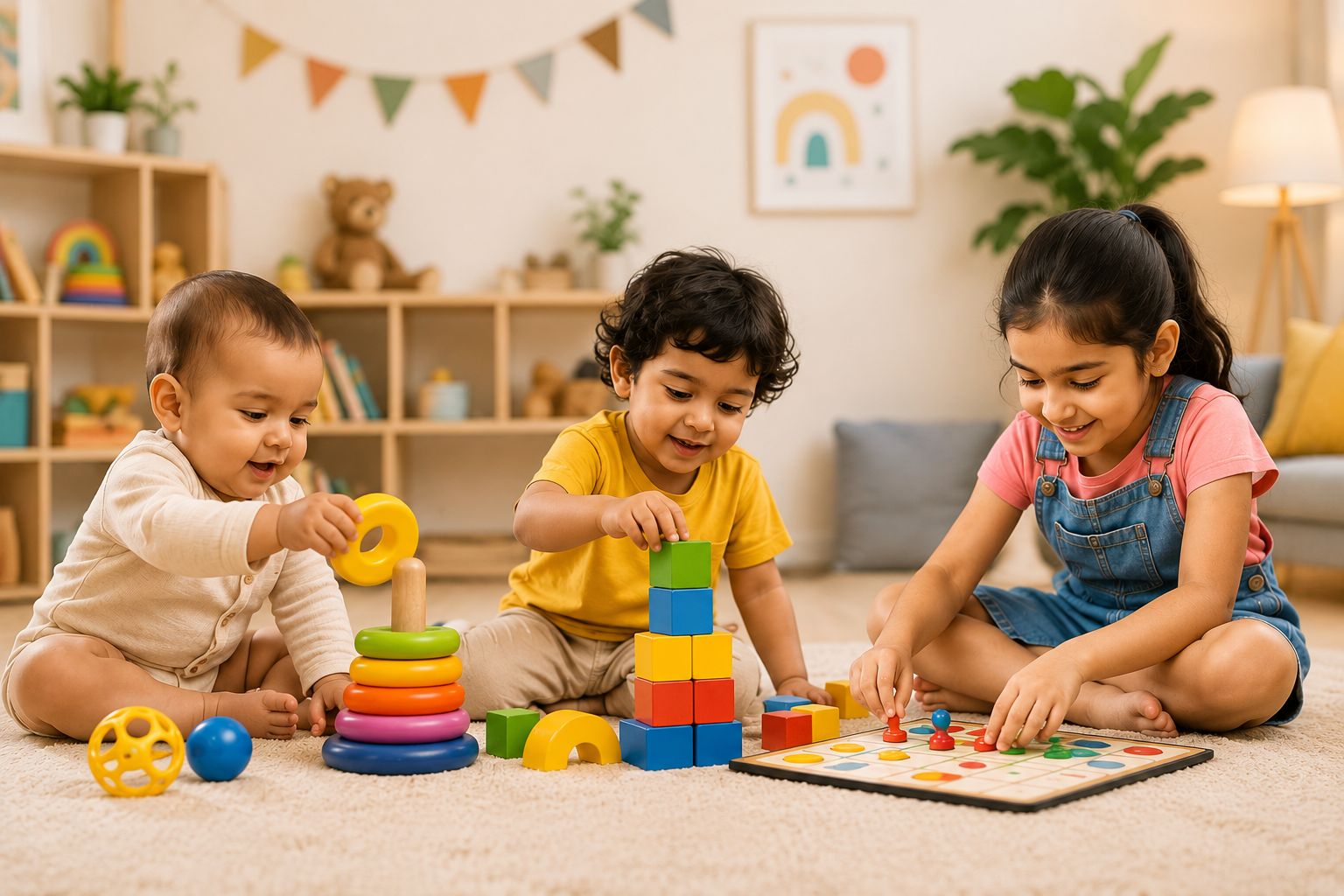
In the early years of a child’s life, from 0–7 years, learning does not always have to happen through books or a fixed curriculum. It can begin at home through everyday activities and simple daily moments. This kind of home-based learning helps build confidence, language, social skills, coordination, and curiosity.
The best part is that meaningful learning at home doesn’t require expensive toys or screens. Simple household items and intentional interactions can create a powerful learning environment for your little one.
In this guide, you’ll discover age-wise games and activities that make learning fun and natural.
Home is truly a child’s first classroom. Before children begin interacting with the outside world, they learn by observing the people and environment around them. Everyday conversations, family interactions, and simple routines teach valuable life skills.
Because children feel emotionally secure at home, they are more willing to explore, experiment, and learn confidently.
Home learning activities naturally support:
Related Reading: How Play-Based Learning Helps Shape a Child’s Overall Development
At this stage, babies learn through touch, sound, movement, and connection. Every interaction helps build brain development and body awareness.
Fill a basket with safe household items like:
Allow your baby to touch and explore each object while describing its texture.
Move a colorful toy slowly from side to side or just out of reach. Encourage your baby to follow it with their eyes or move toward it.
Toddlers love exploring and copying adults. Simple movement-based games strengthen both the brain and body.
Ask your child to copy actions like:
Create a walking path using tape or cushions. Encourage your child to walk along it or step over small obstacles.
Children in this age group enjoy doing things independently. Home activities encourage confidence and early thinking skills.
Hide everyday household items around the room and ask your child to find them using simple clues.
Play music and dance together. When the music stops, everyone freezes like a statue.
Children now begin expressing ideas through language and imaginative play. Creative activities strengthen communication and thinking skills.
Select three random household objects and create a short story together. Encourage your child to continue the story.
Provide cups, containers, or small boxes and challenge your child to build the tallest tower possible.
Children become more independent and enjoy completing small challenges on their own.
Begin a story with one sentence, then let your child continue it. Take turns until the story is complete.
Name a color and ask your child to quickly find objects of that color around the house.
Older children enjoy activities that involve planning, memory, and reasoning.
Place 5–6 household objects on a tray. Allow your child one minute to observe them, cover the tray, and ask them to recall every item.
Describe a household object using clues like:
Let your child guess the object.
Learning during the early years should feel enjoyable rather than overwhelming. Through simple games and everyday interactions at home, children naturally build confidence, curiosity, communication skills, and independence.
These meaningful moments of play become the foundation for lifelong learning while strengthening the bond between parents and children.
No. Everyday household items like bowls, spoons, cushions, cardboard boxes, and paper can become excellent learning tools when used creatively.
Several short play sessions throughout the day are often more beneficial than one long session. Regular hands-on play naturally fits into daily routines.
That’s completely normal. Keep activities flexible, make small changes, or switch to another game. The goal is to keep learning enjoyable rather than forcing participation.
Absolutely. Through play, children develop language, focus, creativity, coordination, confidence, problem-solving, memory, and social skills. Play is one of the most effective ways young children understand the world around them.
Yes. These simple home activities keep children active, curious, and engaged during school holidays without depending on screens. Most require only common household items, making them easy to enjoy every day.