Aug 29, 2026
In a world that is growing rapidly, remembering facts isn’t enough anymore. Being “smart” today looks more like being able to focus and think differently. That’s exactly why Malleshwaram parents

If you are a parent of a 3-year-old, this blog is a must-read. As you know, toddlers are always on the go; they are climbing, grabbing, and running here and there.
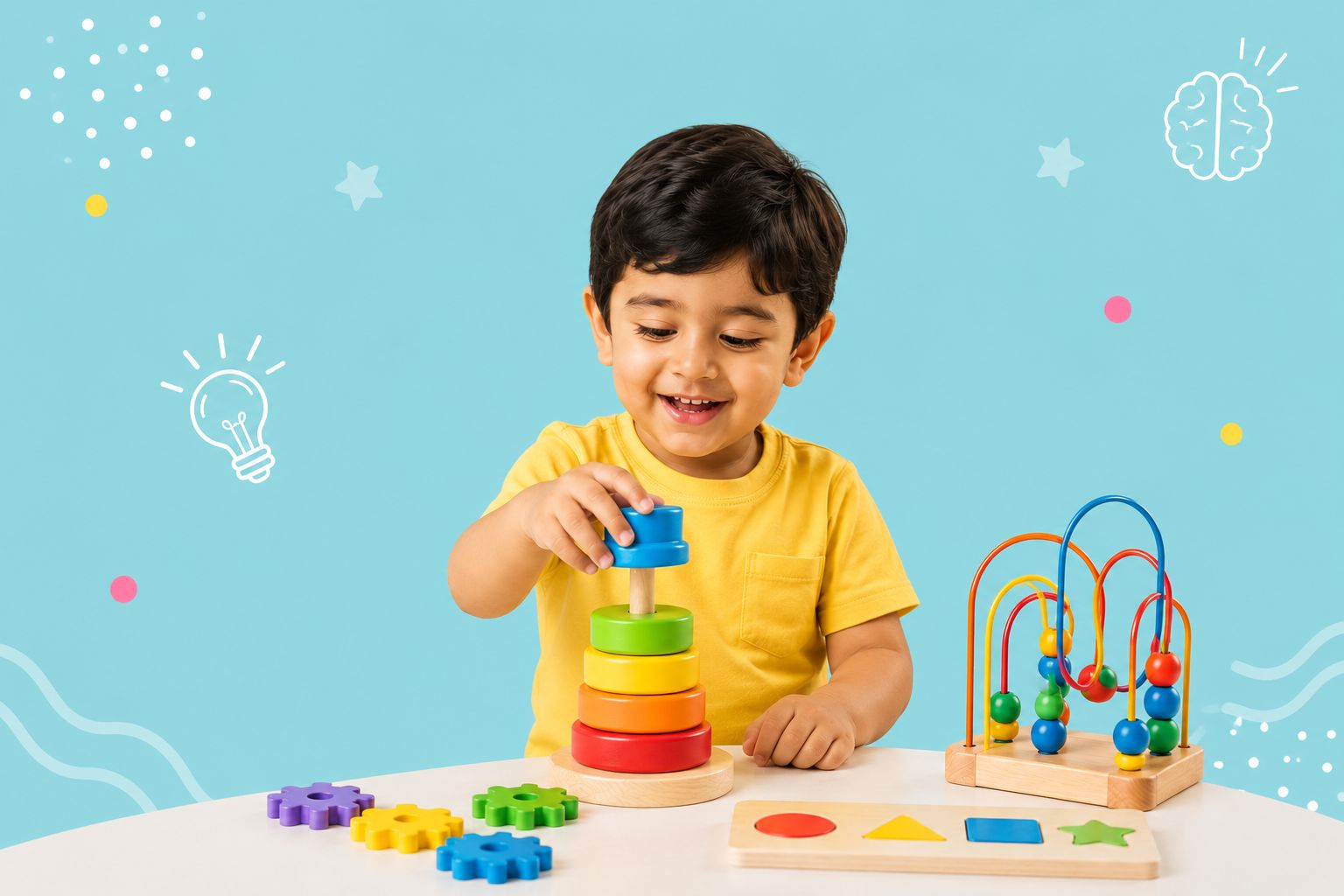
And as always, you think of different ways to keep them engaged the whole time. But the point here is that this age group of kids is in the crucial window of brain development, so instead of giving some random toys or doing some normal activity, here’s a complete guide of best brain development activities that you can do for your 3-year-old, which will be meaningful for them and useful for their lifelong learning.
WHY IS AGE 3 A CRUCIAL WINDOW FOR BRAIN DEVELOPMENT?
Research shows that by the age of 3, a child’s brain is forming neural connections rapidly. This is the stage where skills like creativity, curiosity, memory, and many more are being wired at once, which is why the right kind of activities matter the most.
HERE ARE 10 BRAIN DEVELOPMENT ACTIVITIES TO TRY AT HOME-
You can give your child different types of blocks, coloured blocks, or matchsticks of different sizes, balls, and ask them to sort and match the similar ones together
This activity helps them in early logic and pattern recognition.
Sensory play is one of the most favourite activities for toddlers. You can simply give them Kinetic sand, child-friendly clay, oobleck, or a simple tub filled with rice or water with their small toys, puzzles, or blocks, and ask them to filter it out or put the animals back and forth.
This activity helps them to enhance sensory exploration and activate multiple areas of the brain at once.
Storytelling is always a hit among kids. You may not always have to read a story from a book, but you can always tell them a story about anything, even about your day or how you spent it.
This helps them build language and their ability to converse.
Magna-Tiles are magnetic construction toys for children aged 3 and above. It consists of different geometric-shaped tiles and different colours, so you can just ask your child to build a tower or any shape with the help of this.
This activity helps your child build their spatial reasoning skills
You can show your child different images or any structure from their surrounding and ask them, “What is happening?” or what do you think? Can you describe this image?
This activity helps build their imagination skills, their creativity, and ability to connect different ideas.
With some household items like paper cups, blocks, or beads, you can ask them to build different patterns, like stacking the cups in a tower format, putting the beads in a string, or in a circular format.
Childhood is all about movement and exploration. You can clap in a simple beat and ask your child to repeat it and follow the pattern. This activity helps build auditory memory and coordination skills.
This will be a fun activity to do with them at any time; you do not need any preparation or anything. While you are climbing stairs, you can ask them to count the stairs; if you are inside an elevator, you can ask them to count the number of floors, or count fruits kept on the table.
This activity helps them to build number sense.
Toddlers are always fascinated by different colours, so with this kind of activity, you can ask them to paint something; even if they are scribbling, it’s fine. For crafts, you can do different kinds of origami with them, which are simple and easy to do.
10) Jump the obstacles:
This is a very low prep activity. You can set up cushions, blankets, or small chairs and ask your child to climb over them or crawl besides it. This activity helps build their focus and problem-solving skills.
HOW OFTEN CAN THESE ACTIVITIES BE DONE:
In a day, you can do different kinds of activities depending on how you want to engage your child. Even 15 to 20 minutes of these activities are enough to see a little difference over the span of a few weeks.
Conclusion
You don’t always need a high-prep activity or expensive toys to give your child a meaningful experience, but some home-based easy activities can also prove beneficial for your child.
FREQUENTLY ASKED QUESTIONS-
1)At what age should you start such brain development activities?
The crucial window of brain development starts from birth itself; you can start with activities from as early as you can and increase the complexity as they grow. In fact, Tickle Right activities are also built around this idea and offer age-appropriate activities.
2) Which activity will help improve concentration in children?
There are a lot of different activities that you can do to help enhance your child’s concentration, like the magnatiles, jump over obstacles. To know more about it, read this blog https://tickleright.com/10-proven-ways-to-improve-focus-and-concentration-in-kids/
3) How are brain development activities different from regular play?
Regular play consists of unstructured activities which are designed just to engage your child for the time being. However, brain development activities are structured and designed around specific skills, which doesn’t just engages the child but is useful to nurture their different skills.
4) Can Brain Training improve academic performance?
Yes. Brain training can support academic performance by strengthening key skills like memory, focus, concentration and problem-solving, making it easier for children to understand, retain and apply what they learn.