Sep 18, 2026
Flashcards are one of the simplest toys in the room: a small stack of cards with a picture, word or number on them. But in the hands of a curious

This part of parenthood is not what you must have imagined. One moment, your toddler is talking with you happily and smiling, and the next moment, your toddler is on the floor screaming because you broke the banana in half. You did not see it coming because you had no idea that bananas had rules.
But here’s the thing: toddler tantrums are not because you are doing something wrong, but it’s a sign that your child’s brain is doing what it is supposed to do at this age, since it’s a developing brain.
This blog will walk you through exactly what is happening in your toddler’s brain during tantrums, what to do in that and what not to do.
So, what is actually a toddler tantrum?
A toddler’s tantrum is an emotional outburst involving crying, screaming, and breath-holding, which generally occurs when a child is between the ages of 1 and 4 years and becomes completely overwhelmed. It can be triggered by a variety of factors, such as frustration, hunger, overstimulation, or something as small as a banana being broken in half rather than into pieces.
For us as grown adults, this behaviour may seem completely different from a regular pattern, but from your toddler’s perspective, it makes complete sense because this is a part of their development. They are not being manipulative or overly active; they are just flooded with different emotions, and they do not know yet how to handle it.
WHY DO TODDLERS HAVE TANTRUMS? IS IT BECAUSE OF YOU?
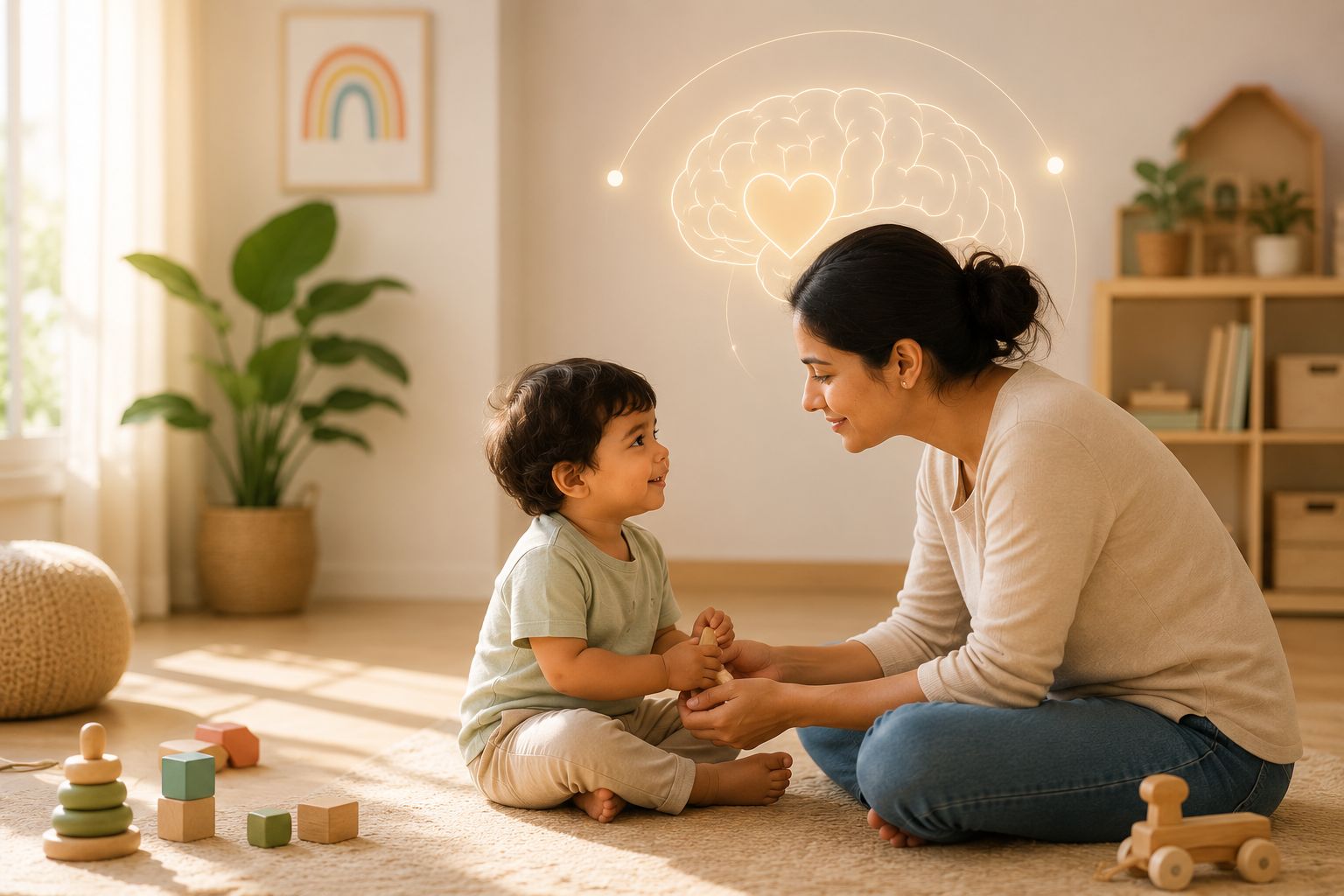
Honestly, before you assume that toddler tantrums are because of your parenting, let me clear it, it is not because of you or your parenting style, but there is a little brain science behind it. The amygdala, which is responsible for firing big emotions, is fully developed, but the part of the brain that manages those feelings, which is the prefrontal cortex, won’t be fully developed until the mid-twenties.
Yes, that is completely right. 20 years of developing the frontal cortex, so when a toddler throws any tantrums, it is because they are not wired yet to cope with their emotions.
Toddler emotional regulation is a slowly developing skill that will be developed over the years through various consistent efforts, and this is why various strategies will help you to handle tantrums.
5 Ways to Handle Your Toddler’s Tantrums
The first and most important rule of parenting is to “Stay Calm”. Before anything else, just take a deep breath. Your toddler’s brain co-regulates, which means it takes emotional cues from you. So they can feel you when you are stressed. But when you slow down and speak to them gently, they begin to mirror that calmness.
So being calm is one of the greatest ways that you can handle your toddler’s tantrums. When you try to slow down your emotions, they’ll also start to slow down in their own way.
Your toddler starts screaming because they wanted to open the door before you. It may not seem like a crisis for you, but for them it is. And when we react with phrases like “ Stop it” or “ You should not do that”, it often adds to their frustration.
Instead, you need to validate their feelings by saying, “ I know you’re upset because I opened the door.” This doesn’t seem like you’re agreeing with them, but it shows that you understand how they feel, which helps them to calm down much faster.
When you label your child’s feelings or emotions with labels like “You are disappointed”, You are upset”, “You are frustrated”. You activate the prefrontal cortex, which is the thinking brain. This part of the brain is offline during the meltdown or their tantrum process, so when you label the feelings in this way, you are trying to control the situation.
So in a way, you are not just trying to manage this tantrum, but you’re also adding a new word to your toddler’s emotional vocabulary. So, now you have given them a particular label for the particular emotion; eventually, they will start saying that “I am frustrated” or “I am upset” instead of crying or screaming.
Even your toddler needs independence to be developed daily; it’s hardwired for almost everyone to get a feeling of doing it by themselves, so a lot of the frustration comes down to power. When they feel completely powerless, they throw a tantrum.
So giving them the authority to make a simple choice to do that by themselves will help you control that tantrum.
Like, instead of telling them to put on your shoes, try to give them a choice, like do you want to put on the white shoes or the blue shoes? This gives them a sense that they do have control over what they are doing, and you have control over their tantrum.
This way of handling tantrums can be a bit of prep for you, but it’s totally worth it. A calm-down corner can be any part of your house, like a sofa a soft toy, or a corner beside your bookshelf, which is generally associated with a happy spot and not the punishment spot. You introduce this corner to them on a good day, make them feel nice about this place, and tell them or introduce it to them when they are in a happy mood.
So whenever you are toddlers meltdown begins, you can just gently guide them towards their calm-down spot. It’s basically your child’s behaviour management through the environment and not punishment.
Here’s what you should avoid.
Toddler tantrums can sometimes be the most difficult part of your parenting, but your reactions are also completely understandable. Sometimes, we can backfire as well, and instead of handling it, you may lose it.
It’s really not because of your parenting, or it doesn’t justify your label of perfect parent, but it just shows a sign of development. And toddlers, sometimes you may also lose your cool too, which is completely fine, but what matters is that you keep showing up, keep saying curious, and keep building that connection
Because the way you respond to your toddlers’ tantrums today is shaping their emotional quotient for tomorrow, which is the most important part.
FREQUENTLY ASKED QUESTIONS